



Eyelid surgery, also known as Blepharoplasty, is a surgical procedure aimed at addressing issues related to the eyelids. It can correct abnormalities in the eyelids' structure or enhance their appearance to better complement the facial features, ultimately improving both vision and confidence for the individual undergoing the procedure. Let's explore what blepharoplasty is, how it's done, and who it's suitable for blepharoplasty.
|
Table of Contents |
- What is Blepharoplasty ?
- Candidate for Blepharoplasty ?
- Candidate for Blepharoplasty ?
- Prepare Before Blepharoplasty
- Blepharoplasty Procedure
- Care After Blepharoplasty
- Possible Complications After Blepharoplasty
- Possible Complications After Blepharoplasty
- Excellence Blepharoplasty: At Lovely Eye & Skin Clinic
- Frequently Asked Questions About Blepharoplasty
What is Blepharoplasty?
Blepharoplasty or Eyelid surgery can improve the appearance of the area around your eyes. It is a procedure that helps reduce under-eye bags and removes excess skin from the upper eyelid. As you age, the skin around your eyes tends to stretch, and the supporting muscles weaken. This can lead to the accumulation of excess skin and fat above and below your eyelids. Consequently, your eyebrows may droop, the upper eyelids may droop, and you may develop under-eye bags. Through blepharoplasty, both upper and lower blepharoplasty can be performed.
What Blepharoplasty Can Solve?
Generally, blepharoplasty can address various issues for:
- Upper eyelids are baggy or drooping
- Bags under the eyes
- The excess skin on the lower eyelids
- The excess skin of the upper eyelids, which obstructs the view of the surrounding area partially

Candidate for Blepharoplasty?
In general, individuals who are in good health, and without other eye conditions are suitable candidates for eyelid surgery or double eyelid surgery. Let's see what types of eyelid issues are suitable for eyelid surgery:
- People dissatisfied with the shape of eyelids.
- Eyelids appear swollen, or have prominent under-eye bags.
- Drooping eyelids obstructing vision.
- Drooping eyelids due to aging or weakened muscles can make you look tired.
- People who already have eyelids But I want it to be more noticeable.
Blepharoplasty Risk Conditions?
Individuals with the following conditions should notify their doctor before eyelid surgery or double eyelid surgery to prevent any risks during the procedure:
- Eye conditions such as glaucoma, dry eyes, or detached retina
- Conditions involving the thyroid gland, such as Graves' disease, thyroid deficiency, or thyroid overactivity
- Conditions such as heart disease, high blood pressure, or other abnormalities in the circulatory system
- Diabetes
- MG (Myasthenia Gravis) is caused by abnormalities in the immune system, age-related muscle weakness of the eye muscles, or congenital muscle weakness of the eye muscles.
Prepare Before Blepharoplasty
Preparing before undergoing blepharoplasty can help ensure a smoother surgical process. Here are some ways to prepare:
- Undergoing medical evaluation or laboratory testing prior to surgery is essential.
- Adjust current medication or start using certain medications.
- Avoid smoking during post operative recovery period.
- Avoid beverages containing caffeine before surgery.
- Get enough sleep.
- Notify pre-existing medical conditions before surgery.
- Temporary stop taking aspirin, anti-inflammatory medications under doctor advice. Multivitamins, blood thinners, and herbal supplements should also be avoided as they can increase the risk of bleeding.
Blepharoplasty Procedure
Blepharoplasty or Eyelid surgery can be performed in two main ways, depending on patient goals and the recommendations of the surgeon. These two methods involve different procedures:
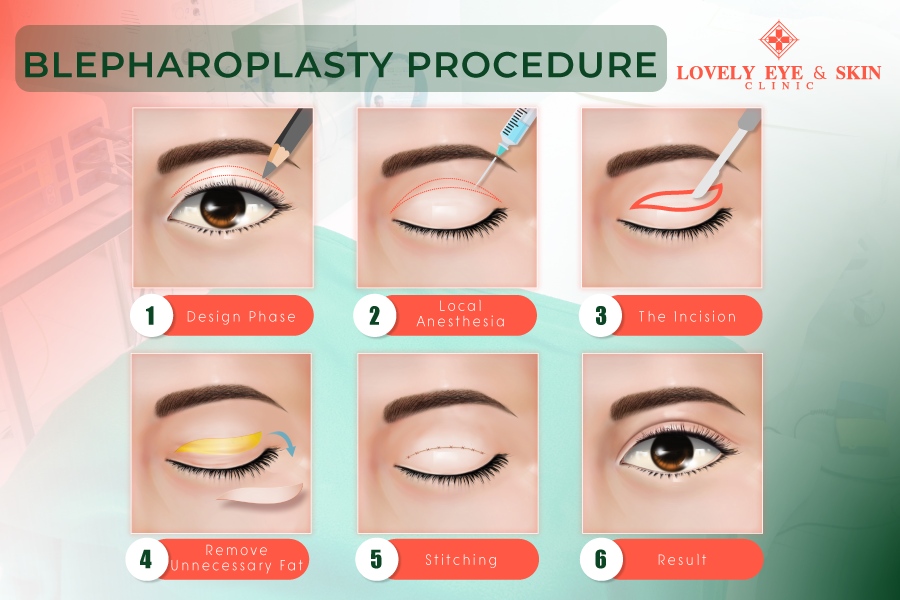
Upper Blepharoplasty Procedure
Upper blepharoplasty is a cosmetic procedure that aims to improve the appearance of the upper eyelids by removing excess skin, muscle, and sometimes fat. Here is an overview of the procedure:
- During upper blepharoplasty, the surgeon typically makes an incision along the natural crease of your upper eyelid. These incisions will be concealed when your eyes are open.
- The surgeon will remove excess skin and protruding fat before closing the incisions. The amount of tissue removed depends on the desired outcome and the patient's anatomy.
- Once the necessary adjustments are made, the incisions are closed with fine sutures.
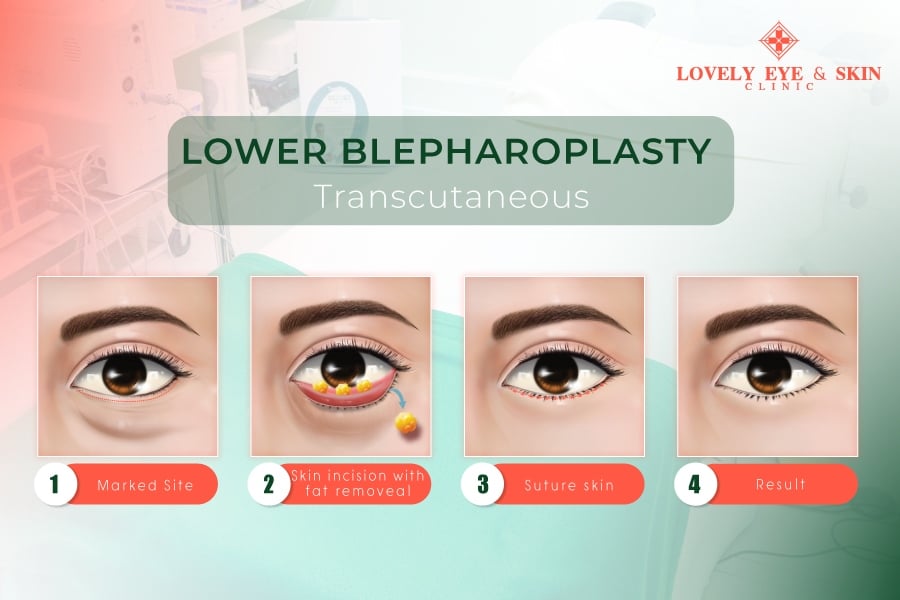
Lower Blepharoplasty Procedure
Lower blepharoplasty is a surgical procedure aimed at rejuvenating the lower eyelids by addressing issues such as excess skin, fat, or puffiness. Here's an overview of the procedure:
- During lower eyelid surgery, the surgeon will typically perform an incision beneath the lower lash line.
- The surgeon will remove excess skin in the lower eyelids through this incision. The choice of incision depends on factors such as the amount of skin and fat to be removed and the presence of visible scarring concerns.
- Once the necessary adjustments are made, the incisions are closed with fine sutures.
Care After Blepharoplasty
In addition to pre-operative preparation, after eyelid surgery, it's important to take care of yourself and follow certain practices to ensure proper healing and faster recovery:
- Use an ice pack to ice your eyes for 10 minutes every hour during the night following surgery. On the following day, use the ice pack for 4 to 5 sessions throughout the day.
- Apply cold compresses to reduce swelling.
- Use prescribed eye drops or ointment as directed.
- Lie with your head elevated higher than your chest for about two to three days.
- Wear sunglasses to protect eyelid skin from sunlight and wind.
- Use acetaminophen (Tylenol, or other brands) to control pain.
- Take medications as prescribed by your doctor. You can resume taking supplements or medications that were previously stopped before surgery immediately after the surgery is successfully completed.
- Take medications as prescribed by the doctor. Resume taking supplements or medications that were previously stopped before surgery immediately after the surgery is successfully completed.
- Avoid exposing the wound to water, sweat, or oil before removing the stitches.
Things to Avoid After Blepharoplasty
Things to avoid after eyelid surgery to promote proper healing and faster recovery include:
- Rub the eyes.
- Smoking.
- Any activities that require exertion for one week, including lifting heavy objects, swimming, jogging, or aerobics.
- You should avoid wearing contact lenses for the first two weeks.
- Taking aspirin, ibuprofen (Advil, Motrin, IB, etc.), naproxen sodium (Aleve, etc.), naproxen (Naprosyn), and other medications or herbal supplements that may increase bleeding should be avoided.
- To prevent itching and swelling of the wound, avoid consuming fermented foods, seafood, chicken, eggs, shrimp paste, and pickled fish for 3 weeks after surgery.
Possible Complications After Blepharoplasty
All surgeries carry risks, although complications and adverse effects from eyelid surgery are relatively rare. However, there is still a possibility of risks associated with eyelid surgery, including:
- Bleeding
- Bruising
- Dry eyes or irritated eyes
- Infection on the surgical wound.
- Difficulty opening or closing your eyes.
- Lower eyelid margin pulled downward.
- Injury to the eye muscles.
Excellence Blepharoplasty: At Lovely Eye & Skin Clinic
Blepharoplasty should be performed at a clinic that is certified and has expert medical professionals. Lovely Eye & Skin Clinic is one of the best eyelid surgery in Bangkok and Thailand can meet the requirements for eyelid surgery because of the following attributes:
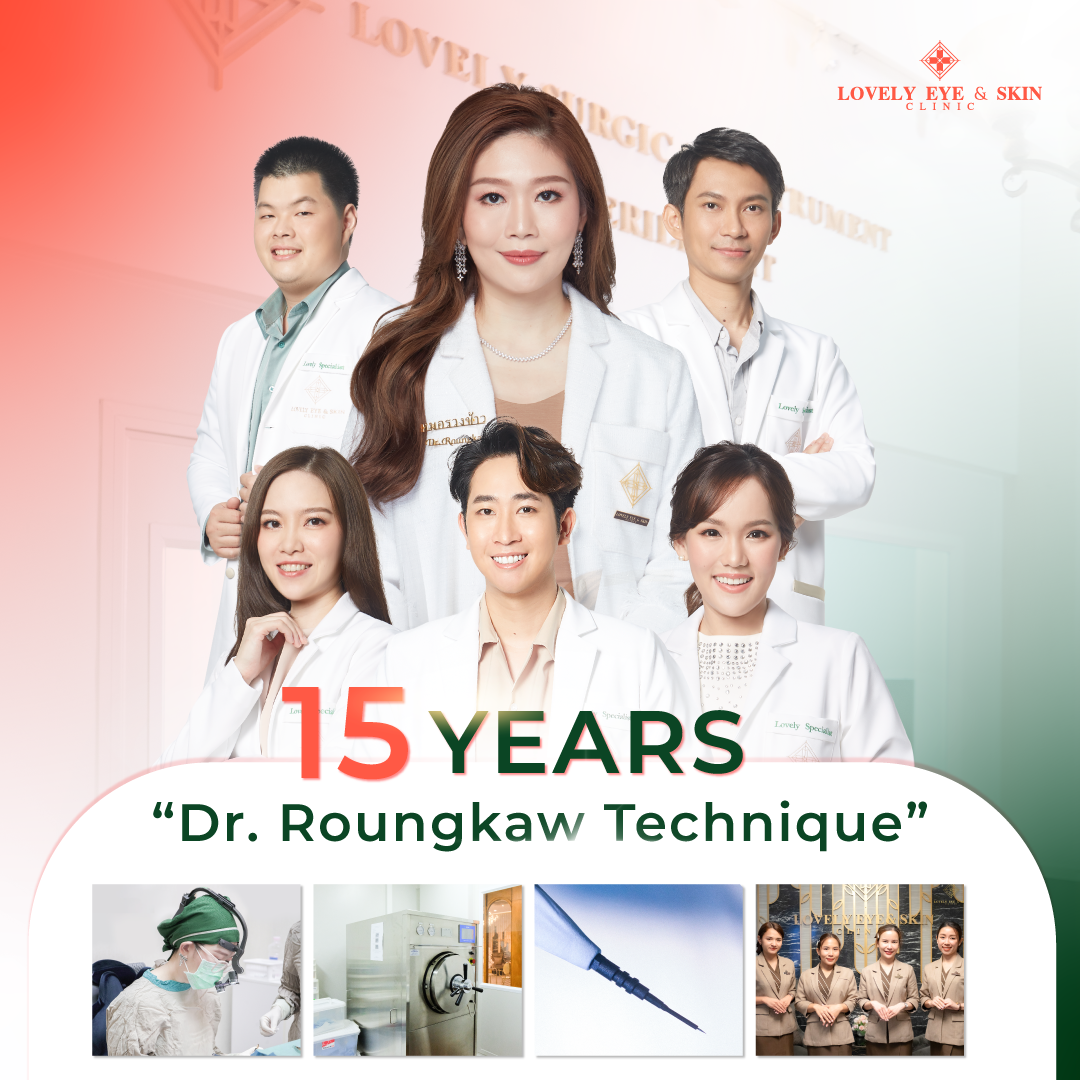
- Doctor Roungkaw is a trendsetter figure in performing double eyelid surgery among ophthalmologists in Thailand.
- The medical team at Lovely Specialists is highly skilled and maintains the same standards as Doctor Roungkaw.
- "Doctor Roungkaw Technique," which utilizes the New Lovely Microlaser technology to address eye issues precisely. This technique aims to reduce swelling and bruising, minimize blood loss, ensure precision, and deliver satisfying results.
- Guaranteed safety is ensured, with over 15 years of trusted eyelid surgery techniques.
- Customer satisfaction surveys are conducted, and data are utilized to continually improve services to meet customers' needs.
- The clinic features a sterile surgical instrument unit, the "Lovely Surgical Instrument Sterile Unit," compliant with hospital standards. Additionally, it is equipped with an autoclave for disease prevention using steam sterilization (Autoclave certified ISO 13485:2016).
- Every eye condition is meticulously cared for, with the option for Private VIP Service available to ensure that every patient receives an impressive experience.
Summary
Blepharoplasty, commonly known as eyelid surgery, is a cosmetic procedure aimed at improving the appearance of the area around the eyes. It can address various issues such as baggy or drooping upper eyelids, under-eye bags, excess skin on the lower eyelids, ptosis correction, and correcting double eyelids surgery.
It's important to undergo eyelid surgery at a specialized clinic with an experienced doctor, receive preoperative consultations to address concerns and expectations, and ensure the surgery addresses the specific issues. This helps achieve eyelids that are aesthetically pleasing and harmonious with the facial features.
Frequently Asked Questions About Blepharoplasty
Here are some common questions regarding eyelid surgery or double eyelid surgery to help alleviate doubts and aid in further consideration before making a decision:
Does it take a long time to recover after blepharoplasty?
You may experience some swelling and bruising in a few days depending on individual condition, which gradually improves. Stitch removal at 9 days the eyes will obviously improve from swelling. However, it may take around 3 to 6 months for complete resolution on average. However, Results vary depending on each individual. Some individuals may take up to 12 months.
Does blepharoplasty cause pain?
Blepharoplasty is one of the least painful beauty treatments. You may feel slight discomfort on the day of the surgery, but you will feel better quickly afterward.
Any scars after Blepharoplasty?
After eyelid surgery, there may be slight swelling and bruising, as well as minor scars and redness. Once the eyelids have settled nicely, any folding or creasing will not be noticeable when blinking or closing the eyes. Whether it will depend on the care or skin condition of each person.