



Key Takeaway
- Causes of Uneven Eyelids include genetics, congenital differences, aging, ptosis, uneven fat, trauma, previous surgery, and daily habits such as rubbing the eyes or sleeping on one side.
- Uneven eyelids often appear as one eyelid sitting higher or lower than the other, with creases that are not aligned, droopy or heavy-looking eyes, and noticeable differences in the depth or definition of the eyelid folds.
- Non-surgical treatments, such as dermal fillers and Botox, can temporarily improve eyelid asymmetry with minimal downtime, while surgical procedures like eyelid crease adjustment, ptosis correction, or fat repositioning offer long-lasting, natural-looking results.
Uneven eyelids are more common than you might think, and for many people, they can impact both appearance and self-confidence. This condition may be present naturally or become more noticeable over time, often affecting how the eyes look in photos, makeup application, and overall facial balance.
Understanding the Condition of Uneven Eyes in Thailand
Uneven eyelids are a common condition, such as hidden eyelids or poorly defined eyelid creases, which can make the eyes appear unbalanced. While it does not affect vision, it can impact overall appearance, making makeup application more difficult and causing the eyes to look tired or less bright. This can affect self-confidence and personal image in daily life and social interactions.
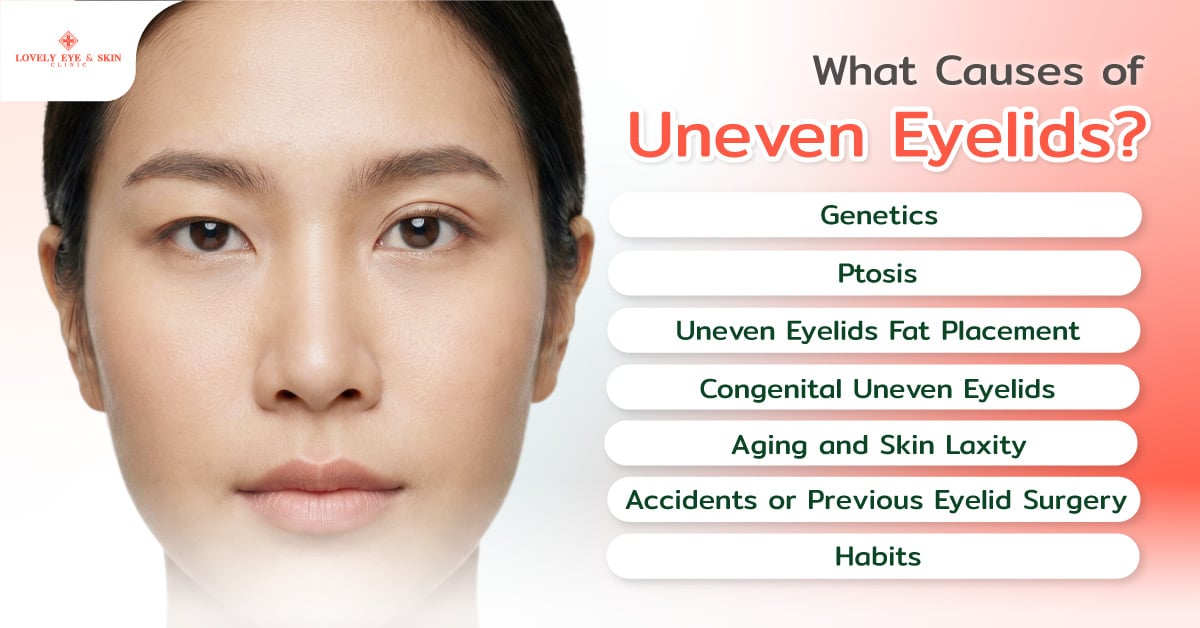
What Causes of Uneven Eyelids?
Uneven eyelids can occur for various reasons, most commonly due to the following factors.
Genetics
Genetics is one of the most common causes of uneven eyelids. Some people are born with differences in eyelid structure, muscle strength, or fat distribution between the two eyes. These natural variations can make one eyelid appear higher, lower, or less defined than the other, and the asymmetry may become more noticeable over time.
Ptosis
Ptosis, or a drooping eyelid, is a condition that can affect one or both eyes and is a common cause of uneven eyelids. It may be present from birth (congenital ptosis) or develop later in life (acquired ptosis). The severity can vary, and in more serious cases, the upper eyelid may droop enough to partially or fully obstruct vision.
Ptosis can occur in anyone, but is more commonly seen in older adults due to age-related stretching or weakening of the levator muscle that lifts the eyelid. In some cases, this muscle may detach from the eyelid entirely. Ptosis may also result from trauma, be a complication of eye surgery, or be associated with neurological conditions, stroke, or tumors.
Uneven Eyelids Fat Placement
Uneven fat distribution in the eyelids can occur in anyone and is a common cause of uneven eyelids, especially with aging. As the eyelid skin stretches and the supporting muscles weaken over time, fat can shift or accumulate unevenly above or below the eyelids, making the asymmetry more noticeable.
Congenital Uneven Eyelids
Congenital uneven eyelids are present from birth and result from differences in eyelid structure, muscle development, or fat distribution between the two eyes. One eyelid may have a weaker levator muscle or a less defined crease, causing noticeable asymmetry as the face develops. While the condition is usually harmless, it can become more apparent over time and may affect appearance or confidence.
Aging and Skin Laxity
As we age, the skin around the eyes gradually loses collagen and elasticity, becoming thinner and more lax. The muscles that support the eyelids also weaken over time, causing the eyelids to sag or droop unevenly. These age-related changes can make uneven eyes more noticeable, even in people who previously had symmetrical eyes.
Accidents or Previous Eyelid Surgery
Uneven eyelids can develop after accidents or previous eyelid surgery due to trauma, scar tissue, or changes in muscle and tissue structure. Injury or surgical procedures may affect one eyelid more than the other, leading to differences in eyelid height, crease definition, or movement. In some cases, asymmetry becomes more noticeable as healing progresses or scar tissue forms.
Habits
Daily habits such as frequent eye rubbing or consistently sleeping on the same side can contribute to uneven eyelids over time. Repeated pressure and friction may stretch the eyelid skin and weaken the supporting muscles on one side, gradually making eyelid asymmetry more noticeable.
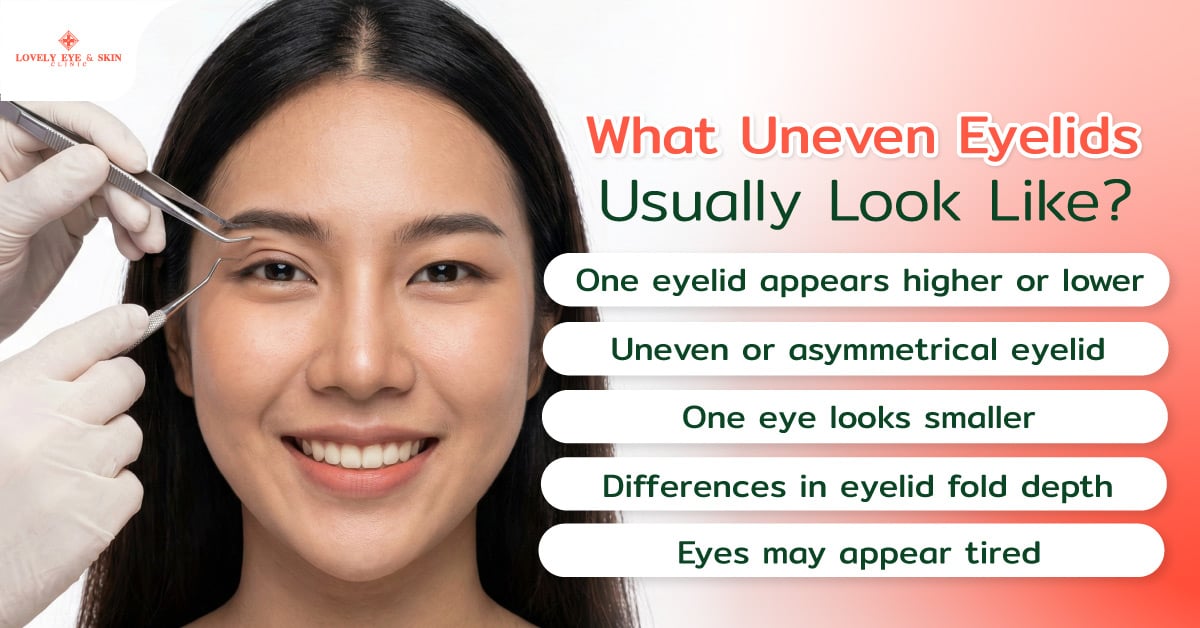
What Uneven Eyelids Usually Look Like?
- One eyelid appears higher or lower than the other
- Uneven or asymmetrical eyelid creases
- One eye looks smaller, heavier, or more droopy
- Differences in eyelid fold depth or definition
- Eyes may appear tired, unbalanced, or less symmetrical overall
Effective Treatment Options for Uneven Eyelids
Uneven eyelids can be treated with non-surgical or surgical methods, chosen based on the cause and severity of the asymmetry.
Non-Surgical Techniques to Improve Uneven Eyelids
Non-surgical treatments can improve eyelid asymmetry with minimal downtime, though the results are usually temporary and may require ongoing maintenance.
- Filler Dermal fillers can add volume and correct eyelid asymmetry by lifting droopy lids, balancing uneven fat, or filling hollows. Results are immediate but temporary, lasting several months and requiring repeat treatments.
- Botox Botox can improve uneven eyes by relaxing overactive muscles, subtly lifting and balancing the lids. Effects appear in a few days, last several months, and require repeat treatments to maintain results.
Surgical Eyelid Correction for Long-Lasting Results
Surgical procedures offer long-lasting results for uneven eyelids, including ptosis correction, crease adjustment, and fat repositioning or removal based on the cause.
- Eyelid surgery to create symmetrical double eyelids. This procedure adjusts the eyelid crease to make both eyes appear balanced and symmetrical. It can enhance overall eye shape, improve facial harmony, and provide long-lasting, natural-looking results.
- Inner or outer corner eye opening Surgery in the inner or outer corners of the eyes can correct asymmetry caused by differences in eye width or shape. It helps create a more proportional and harmonious appearance between the two eyes.
- Ptosis correction addresses droopy eyelids caused by weak or stretched levator muscles. The procedure lifts the affected eyelid, improving symmetry, vision if obstructed, and overall eye aesthetics.
Preparation Tips for Uneven Eyelids Surgery
- Discuss your goals, medical history, and the most suitable surgical method for your eyelid asymmetry.
- Undergo necessary eye exams or general health checks to ensure you are fit for surgery.
- Stop blood-thinning medications, supplements, or herbal products as advised by your doctor to reduce bleeding risk.
- Arrange time off work and prepare for post-surgery care, including cold compresses and limited physical activity.
- Avoid alcohol, smoking, and lack of sleep in the days leading up to surgery to support healing.
Post-Treatment Care and Recovery Uneven Eyelids
- Apply cold packs during the first 3 days to reduce swelling and bruising.
- Take prescribed painkillers, antibiotics, or anti-inflammatory medications as directed.
- Avoid rubbing, pressing, or exposing the eyelids to dust, wind, or water until fully healed.
- Avoid strenuous exercise, heavy lifting, or bending over for at least 1-2 weeks.
- Attend all scheduled check-ups to monitor healing and remove stitches if necessary.
- After initial healing, use recommended ointments or eye creams to reduce scarring and maintain eyelid health.
Benefits of Correcting Uneven Eyelids
- Creates balanced, harmonious eyelids for a more attractive appearance.
- Makes the eyes look brighter, refreshed, and youthful.
- Increases self-esteem and comfort in social or professional settings.
- Can improve vision if droopy eyelids were partially blocking sight.
- Surgical correction provides lost-lasting, while non-surgical options offer temporary improvements.
Why Choose Lovely Eye & Skin Clinic for Eyelid Correction
- The Lovely Specialist team specializes in eyelid correction, while the Lovely Skin medical team focuses on aesthetic treatment for skin around the eyes.
- Personalized approach based on your eyelid asymmetry, facial structure, and desired results.
- Access to both surgical and non-surgical treatments, including Eye Recovery programs for faster healing.
- Private VIP service from consultation to follow-up session after treatment procedure.
- Guidance before, during, and after the procedure to ensure optimal results and smooth recovery.
- Focus on achieving balanced, symmetrical eyelids that enhance overall appearance.
Summary
Uneven eyelids, such as hidden creases, droopy lids, or asymmetrical folds, are common and can affect appearance and confidence. Causes include genetics, congenital differences, aging, ptosis, uneven fat, trauma, previous surgery, or daily habits. Non-surgical treatments like fillers and Botox injections temporary improvement, while surgical correction provides long-lasting results, including symmetrical double eyelids, corner adjustments, and ptosis repair. Surgery preparation and proper post-care, including cold compresses, medication adherence, and follow-ups, support healing. Correcting uneven eyelids enhances symmetry, facial aesthetics, confidence, eyelid function, and provides natural, lasting results.
At Lovely Eye & Skin Clinic, treatments are personalized, performed by experienced surgeons, and supported by advanced techniques and comprehensive care to ensure safe, effective, and natural-looking outcomes.
Frequently Asked Questions About Uneven Eyelids (FAQ)
Here are some common questions many people have about uneven eyelids, helping you better understand this condition, its causes, and available treatment options.
Can I fix uneven eyelids without surgery?
Uneven eyelids can sometimes be improved without surgery using non-invasive methods such as dermal fillers program to add volume or Botox program to relax overactive muscles. These treatments can temporarily balance eyelid height and shape, but the results are not permanent and typically require repeat sessions to maintain the result.
Can massage help uneven eyelids?
Gentle eyelid massage may improve circulation and reduce mild puffiness, but it cannot correct structural asymmetry caused by muscle weakness, fat distribution, or congenital differences. Over-massaging can even worsen swelling or irritation, so it should be done cautiously and under guidance if recommended.
Are uneven eyelids permanent?
Uneven eyelids can be permanent if caused by genetics, congenital factors, ptosis, trauma, or previous surgery. However, some mild asymmetry caused by temporary swelling, fatigue, or lifestyle factors may improve over time. For long-term correction, surgical procedures or professional non-surgical treatments are typically required.