



|
Key Takeaway
|
|
Ptosis, or drooping eyelids, occurs when the upper eyelid falls lower than normal, potentially affecting both your appearance and vision. It can be caused by aging, nerve or muscle problems, or underlying medical conditions. This article explains the causes, common symptoms, and treatment options to help you better understand and manage this condition.

What is Ptosis?
Ptosis is a condition in which the eyelid muscles cannot function fully, caused by a malfunction in the mechanism that lifts the eyelid when opening the eyes. It occurs when the levator muscle, responsible for raising the upper eyelid, becomes weak or works abnormally, making the eyelid unable to stay lifted. This causes the eyelid to droop over the pupil, giving the appearance of constantly sleepy eyes.

Types of Ptosis
Ptosis eyes can vary in its causes and severity. Understanding the different types can help in identifying the underlying issue and choosing the appropriate treatment. The main types are as follows.
Congenital Ptosis
When it is present at birth or within the first year of life, it is referred to as congenital ptosis. Most cases occur in isolation and do not impair vision, although refractive errors and amblyopia should always be checked. Ptosis that develops rapidly over days or weeks may indicate a serious medical condition and requires a thorough neurological and physical evaluation.
Aponeurotic Ptosis
Aponeurotic ptosis is the most common form of acquired ptosis and the leading cause of ptosis overall. Often referred to as senile or involutional ptosis, it typically occurs in older adults as a result of age-related changes.
Involutional ptosis
Involutional ptosis refers specifically to age-related drooping of the eyelids, most often seen in elderly patients. It results from stretching, thinning, or disinsertion of the levator aponeurosis—the tendon-like tissue that helps lift the upper eyelid—while the levator muscle itself usually retains good strength. This mechanical weakening leads to the gradual descent of the eyelid, sometimes affecting one eye more than the other.
Neurogenic Ptosis
Neurogenic ptosis arises from nerve-related issues that affect the eyelid muscles. It is most often linked to dysfunction of the oculomotor nerve (cranial nerve III), which supplies the levator palpebrae superioris muscle responsible for lifting the upper eyelid.
Myogenic Ptosis
Myogenic ptosis is a condition in which drooping of the eyelid results from abnormalities in the muscle directly responsible for lifting the upper eyelid (the levator palpebrae superioris) and sometimes other surrounding ocular muscles. These abnormalities cause muscle weakness, preventing the eyelid from being fully elevated.
Mechanical Ptosis
Mechanical ptosis occurs when a mass, cyst, tumor, or other abnormal growth on the eyelid increases its weight, placing strain on the levator muscle and causing the eyelid to droop. In more severe cases, where the drooping interferes with vision or daily activities, surgical intervention may be necessary to remove the mass and restore proper eyelid function.
Traumatic Ptosis
Traumatic ptosis occurs when an injury or accident damages the muscles, tendons, or surrounding tissues of the eyelid, leading to drooping. The severity of the trauma determines the treatment approach, and in many cases, surgical repair may be necessary to restore proper eyelid function and appearance.
What Causes Ptosis?
Ptosis may develop for several different reasons, with the most common causes listed below.
- Congenital muscle underdevelopment can cause ptosis in children when the eyelid muscles do not develop properly, which may lead to amblyopia or permanent vision impairment.
- Age-related changes in older adults can cause the levator muscle and its tendon to stretch over time, resulting in drooping of the upper eyelid.
- Serious medical conditions such as stroke, brain tumors, or cancers affecting the nerves and muscles around the eye can lead to ptosis. Neurological or muscular disorders like myasthenia gravis can weaken the eyelid muscles and their controlling nerves.
- A stye or hordeolum can temporarily cause the eyelid to droop due to swelling and increased weight.
- Trauma or injuries affecting the nerves or muscles responsible for lifting the eyelid may result in ptosis.
- Repeated eye surgeries can weaken the eyelid muscles or their supporting structures, leading to drooping.
Symptoms of Ptosis
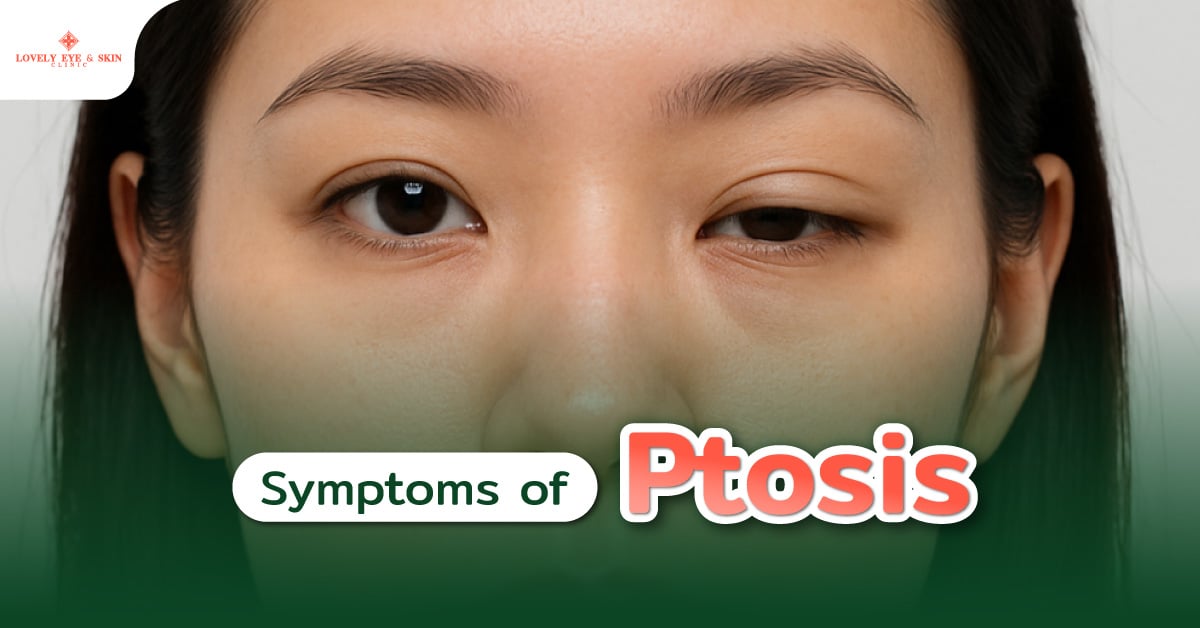
Ptosis eyes may present with several noticeable symptoms, such as.
- Drooping eyelids that give the eyes a tired or sleepy appearance.
- Even when the eyes are fully open, the eyelids do not lift completely.
- Multiple folds of the eyelid may appear due to drooping.
- The eyelid muscles may not function fully, limiting proper opening and closing of the eyes.

Diagnosis of Ptosis
The methods used to examine and diagnose ptosis include the following.
- Taking a detailed medical history and performing a physical examination to assess the cause of ptosis and the duration of symptoms.
- Conducting an eye examination using specialized instruments by an ophthalmologist.
- In some cases, additional tests may be required, such as the ice pack test to evaluate eyelid muscle weakness or blood tests to identify underlying conditions.
Treatment Options for Ptosis
Treatment for ptosis can vary depending on the cause and severity, and may include the following approaches.
Non-Surgical Treatment
There are several non-surgical ways to manage ptosis, including.
- Medication Used for ptosis caused by neurological or muscular disorders, such as myasthenia gravis. Medications can help improve eyelid muscle function.
- Ptosis Crutches or Taping Devices or adhesive tape can temporarily lift the eyelid, suitable for mild ptosis or for those not ready for surgery.
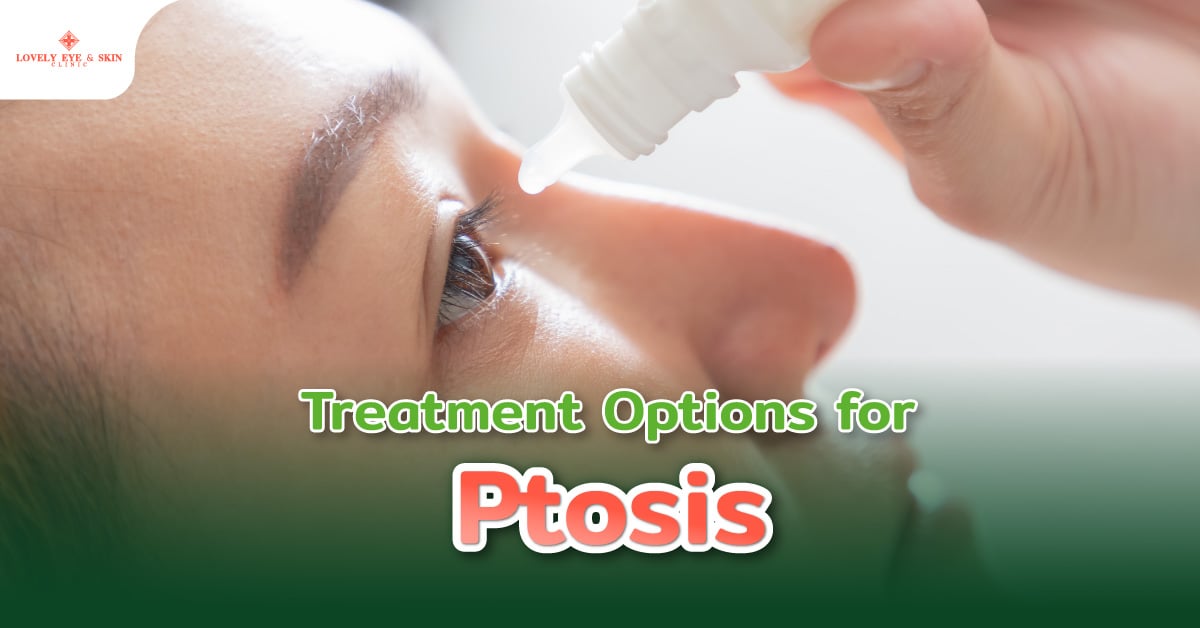
- Eye drops Certain eye drops can slightly stimulate the eyelid muscles and help relieve associated dry eye symptoms.
Surgical Correction
Ptosis can be effectively treated through surgical procedures when the drooping significantly affects appearance or vision.
Levator Resection
Levator resection is an eye surgery that strengthens the muscle responsible for lifting the upper eyelid. In this procedure, part of the levator muscle is shortened or tightened to help the eyelid lift higher. It is usually performed in patients with mild to moderate ptosis who still have some muscle function. Recovery is generally quick, and the surgery can improve both the appearance of the eyes and vision.
Frontalis Sling
Frontalis sling is a surgical technique used to correct severe ptosis, especially when the levator muscle is very weak or non-functional. In this procedure, the upper eyelid is connected to the forehead muscle (frontalis) using a sling made of tissue or synthetic material. This allows the forehead muscle to help lift the eyelid, improving eye opening, appearance, and sometimes vision. Recovery is generally smooth, and the results are often long-lasting.

Post-Surgery Recovery and Considerations
Self-care after eyelid surgery can help ensure a smooth recovery and optimal results and may include the following measures.
- Apply cold compresses regularly during the first 3 days after surgery to reduce swelling and bruising.
- From day 6 onward, warm compresses twice daily for about 10 minutes each time for approximately 1 week.
- Sleep with your head elevated and avoid lying on your side for the first 2 days after surgery to help prevent eyelid swelling.
- Avoid bending down, straining, or forceful sneezing.
- Avoid seafood, chicken, eggs and fermented fish for 3 weeks after surgery.
- Limit screen time on computers and mobile devices after surgery.
- Use an eye shield or protective cover to prevent accidental contact with the surgical area.
- Keep the incision area dry and avoid contact with water or sweat. You may wash your face 3 days after stitches are removed.
- Apply a thin layer of ointment to keep the incision moist after the stitches are removed.
- Take all prescribed medications as directed by your doctor.
Risks and Complications of Ptosis
Weak eyelid muscles are generally not life-threatening, but if left untreated, ptosis can negatively affect vision and quality of life. Severely drooping eyelids may block the line of sight, making everyday activities such as driving or working more difficult. In children with congenital ptosis, untreated cases can lead to vision problems like amblyopia (lazy eye), which can affect visual development.
In addition, drooping eyelids can make the face appear tired and less vibrant, impacting self-confidence. Those with severe ptosis may experience headaches or eye strain from constantly raising their eyebrows or tilting their head to see properly. Timely treatment is therefore important to prevent both long-term health and psychological effects.
Conclusion
Ptosis, or drooping eyelids, can result from weak eyelid muscles, nerve abnormalities, or other causes. It causes the upper eyelids to droop, affecting both vision and appearance. Ptosis may lead to fatigue, headaches, or vision problems in children. Diagnosis is made through medical history, physical examination, and an eye exam by an ophthalmologist.
Treatment options include non-surgical methods such as medication, compresses, taping, or eyelid support devices, as well as surgical procedures like Levator Resection or Frontalis Sling, depending on the cause and severity. Following post-operative care instructions is important for a safe recovery.
At Lovely Eye & Skin Clinic, we offer double eyelid surgery with excess eyelid skin removal starting from 29,000-125,000 Baht, and (performed alongside double eyelid surgery) starting from 50,000 Baht (price for double eyelid surgery + levator muscle lift), performed by the medical team and Dr. Roungkaw. These treatments help correct drooping eyelids while enhancing appearance and maintaining vision.
Frequently Asked Questions About Ptosis (FAQ)
Many people have questions about ptosis, including the most suitable treatment methods, expected results, and safety. We have compiled the most frequently asked questions here for your reference.
Who is a candidate for surgical treatment of ptosis?
Surgical treatment of ptosis is suitable for individuals whose drooping eyelids affect vision or daily activities, including children with congenital ptosis at risk of amblyopia, adults experiencing eye strain or fatigue, and anyone seeking to improve appearance and self-confidence. The decision depends on eyelid muscle strength, the underlying cause, and overall eye health.
How long does it take to fully recover from ptosis surgery?
Recovery time after ptosis surgery varies depending on the type and extent of the procedure, as well as individual healing. Most patients notice initial improvement within a few days to a week, with swelling and bruising gradually subsiding.
Full recovery, including final eyelid position, muscle function, and appearance, usually takes 4 to 6 weeks, though minor changes can continue for a few months. Following post-operative care instructions from the surgeon is essential for optimal results and a smooth recovery.
Why is my eye still droopy after ptosis surgery?
A slight droopy eyelid after surgery is often due to swelling, bruising, or temporary muscle weakness. Full results usually appear within 4 to 6 weeks, but consult your surgeon if significant drooping persists.

Information by Dr. Mina, Lovely Eye, Dr. Mina Narathipakorn, W. 43109
One of the Lovely Eye Specialist team, Eye Surgery, Dr. Ruangkao Technique, Lovely Eye & Skin Clinic (2020 - present)