


Some people may experience frequent blurry vision without knowing the exact cause and may not seek treatment. However, leaving this condition untreated can have more serious consequences than expected. In this article, we will explore the causes and treatment to address this issue effectively.
|
Table of Contents |
- What is Blurry Vision
- Causes of Blurry Vision
- Symptoms of Blurry Vision
- Symptoms of Blurred Vision That You Should See Doctor
- Blurry Vision Diagnosis
- Blurry Vision Treatment
- Undergo Surgery to Treat Blurry Eyes
- Preparation Before Surgery
- Ways to Prevent Blurry Vision
What is Blurry Vision
Blurry Vision is a condition in which the eyes are unable to see images clearly, resulting in a temporary loss of visual sharpness. Vision may be blurred, doubled, or faded. This condition can occur in one eye or both. For causes of blurry vision, we will further explore in this article.
Causes of Blurry Vision
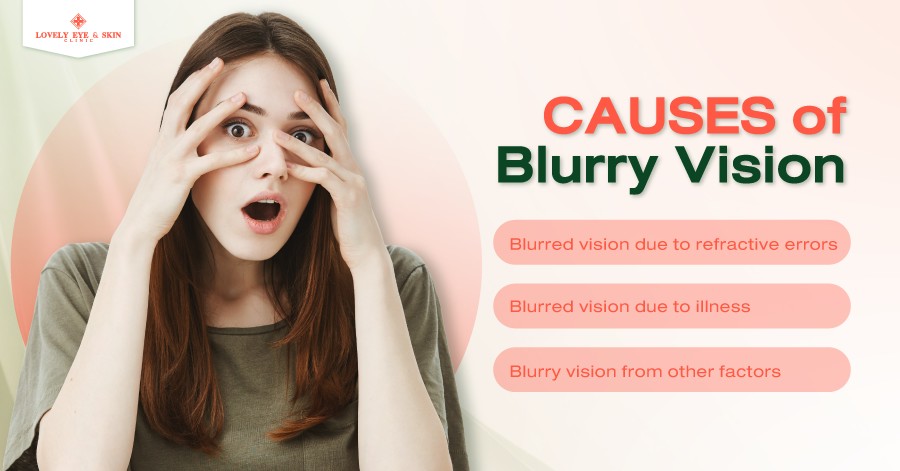
Blurry vision can be caused by various factors, such as refractive errors, underlying medical conditions, and other contributing factors. These causes can be explained in more detail as follows:
Blurred vision due to refractive errors
This condition can happen to anyone, regardless gender or age. The nature of the blurriness may vary depending on the type of refractive error. Blurred vision in either the right or left eye can also result from unequal vision between the two eyes.
-
Short-sightedness (Myopia)
This condition causes difficulty seeing distant objects clearly. It occurs when the eyeball is longer than normal or the cornea is too curved, causing light to focus in front of the retina. People often need to squint or focus on nearby objects to see more clearly. Excessive straining can lead to eye and head muscle fatigue, which may result in blurred vision.
-
Short-sightedness (Hyperopia)
This condition makes it difficult to see nearby objects clearly, while distant objects remain sharp. It is caused by a cornea that is too flat or an eyeball that is too short, causing light to focus behind the retina. This can strain the eye muscles and even the surrounding head area, leading to fatigue and blurred vision, similar to myopia.
-
Astigmatism
This condition occurs when the cornea has irregular curve and or shape. This prevents light from focusing properly on the retina, resulting in unclear vision to look at distant objects. In addition, this may also cause double vision, contributing to overall blurriness.
-
Presbyopia
It is a condition when you are unable to see distant objects clearly as you age. It makes the lens becomes less elastic, and changes in the cornea and vitreous body reduce visual clarity, leading to blurred vision.
Blurred vision due to illness
Blurry vision can occur due to both eye-related or non eye-related diseases.
-
Eye-related Diseases
For individuals with these eye conditions, blurry vision may occur. Examples include:
- Conjunctivitis: caused by bacteria, virus infection or harmful chemicals which contribute to allergies. Our eyes will produce white mucus discharge to help remove these foreign substances, which can result in watery eyes, redness, and blurred vision.
- Optic Neuritis: caused by optic nerves deterioration which transmit the signals to the brain. This results in reduced visual clarity or sudden vision loss in some circumstances. This mostly occurs in one side of the eyes.
- Cataract: a condition in which protein in the eye's lens change in their structure, resulting in a thin membrane in the eye reduces the amount of light that reaches the cornea. Thus, your vision become even worse with doubled and blurred images.
- Ocular Myasthenia Gravis: a condition when eyes cannot fully open due to decreased lifting strength of the eyelid. As a result, the drooping eyelid partially covers the pupil, reducing the amount of light reaching the cornea. This can lead to blurred vision, doubled vision, or hazy eyesight.
-
Non Eye-related Diseases
If you experience any of these illness, it may contribute to blurry vision as well. Examples include:
- Migraine: a condition when arteries in the brain suddenly dilate, causing severe headache. The pain may spread to the eye sockets, leading to blurred vision or seeing shimmering or flashing lights
- Sinus: people with sinus inflammation may have infection spread to conjunctiva, causing eye pain, redness, blurred vision, and in severe cases, may lead to vision loss.
- Diabetes: Patients with diabetes with persistent high blood sugar level for a long period of time, it can damage damage the blood vessels in the retina and macula. This may result in seeing dark spots, distorted vision, blurry vision, and potentially blindness.
Blurry vision from other factors
Apart from eye diseases or certain medical condition, daily habits and physical condition of each individual can contribute to blurry vision, as follows:
- Dry eyes from daily habits: prolonged screen time may prevent the eyes from producing enough tears and keep eye surface lubricant, leading to dry eyes and temporarily blurred vision.
- Wearing contact lenses for a long period of time: prevent tear circulation which reduce lubrication to the cornea, leading to irritation, red eyes, blurred vision, and an increased risk of infection.
- Lasik surgery: Femto LASIK (bladeless LASIK) is a surgical procedure using Femrosecond laser. This leads to blurry vision or pain on surgical area.
- Pregnant women: during pregnancy, there is a change in estrogen hormones, causing side effects that lead the body to retain more fluid, resulting in swollen eyes and blurred vision.
Symptoms of Blurry Vision
Common symptoms of blurry vision include:
- Difficulty seeing distant objects clearly
- The pupils cannot fully adjust; during daytime, the eyes become sensitive to light. During nighttime, vision is reduced.
- Headaches and inability to focus on surrounding areas
- Eye irritation, dryness, and eye discharge
- Colors appear faded, and it becomes harder to distinguish between colors
- Seeing small dark spots floating across the field of vision
What Diseases can Blurred Vision Be a Sign Of?
Those with blurred vision or sudden blurred vision, especially those aged 40 or above. Blurred vision may be a warning sign of other underlying conditions.
- Glaucoma
- Preeclampsia may lead to blurry vision and headache. It is often associated with abnormally high blood pressure in pregnant women who previously had no history of hypertension. If symptoms such as dizziness, blurred vision, seeing dark spots, and body aches occur, medical attention should be sought promptly for proper diagnosis.
- Pakinson
- Allergic conjunctivitis may cause blurry vision in some cases.
Symptoms of Blurred Vision That You Should See Doctor
If you experience blurred vision that interferes with your daily life—such as seeing double, having headaches after prolonged focusing, or noticing abnormalities in your eyes (for example, a cloudy lens, dark circles under the eyes, redness in the whites of the eyes, or red eyes)—you should seek medical attention as soon as possible. This helps prevent the condition from worsening or accumulating, which could lead to severe eye diseases and potential vision loss in the future.
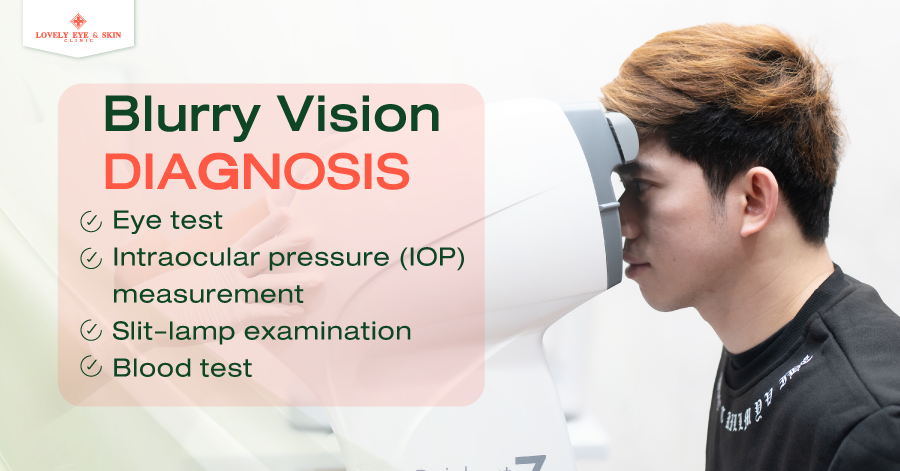
Blurry Vision Diagnosis
4 ways to diagnose this condition include:
- Eye test: A vision test used to assess overall eye performance, including color vision testing, visual field testing, and reading a Snellen Chart
- Intraocular pressure (IOP) measurement: a test used to assess the balance of fluid production and drainage inside the eye. It helps evaluate the risk of various eye diseases that may cause blurred vision.
- Slit-lamp examination: performed using a special microscope that allows detailed visualization of different parts of the eye, including the skin around the eyes, eyelids, eyelashes, sclera (white of the eye), cornea, iris, and lens. This test helps detect abnormalities that may lead to eye diseases and blurred vision.
- Blood test: examination is performed to see abnormalities in the blood supply to retina. It can also help determine the risk of conditions that may cause blurred vision as a complication, such as diabetes, migraines, and sinusitis.
Blurry Vision Treatment
Food
As diet plays an important role in maintaining overall health, if you frequently experience blurred vision, it is recommended to choose foods that contain nutrients beneficial for eye health.
- Vegetables and plants: Choose vegetables rich in Omega-3 that help nourish the eyes, such as carrots, spinach, cauliflower, and broccoli. Also include plant-based proteins like soybeans and tofu, which help slow down eye degeneration.
- Fish: Eat both marine fish such as tuna, salmon, and mackerel, as well as freshwater fish like snakehead fish, catfish, and pangasius. These are rich in Omega-3, which supports eye health.
- Fruits: Consume a variety of colorful fruits such as berries, kiwi, oranges, and persimmons, which help provide antioxidants and nourish the eyes.
Diet supplement
Another way to help improve blurred vision for those who want to nourish their eyes from within—but are unable to consistently choose the right foods—is to take dietary supplements that support eye health. These supplements help compensate for and replenish nutrients that the body may not be able to produce पर्याप्तly. It is recommended to choose supplements made from natural extracts, containing ingredients such as bilberry, lutein, and zeaxanthin, which are beneficial for eye health and may help slow the development of certain eye diseases.
Eye muscle exercise
Improving blurred vision through eye muscle exercises can help reduce excessive focusing, relax fatigued eye muscles, and improve their flexibility. Simple exercises include looking up, down, left, and right alternately, or rolling your eyes in a circular motion, which can help relax the eye muscles.
Use artificial tears
Artificial tears are eye lubricants that contain substances which help maintain moisture in the eyes, such as carboxymethylcellulose, hydroxyethyl cellulose, hydroxypropyl methylcellulose, and dextran. They can be used to reduce eye irritation, relieve blurred vision caused by dry eyes, and are also suitable for individuals experiencing blurred vision after surgery or LASIK.
Surgery
For individuals experiencing blurred vision caused by eye conditions such as cataracts, ptosis (weakened eye muscle), or drooping eyelids, treatment can be done through surgery. Eye surgery requires a high level of precision and should only be performed by a skilled and experienced doctor.

Why Undergo Surgery to Treat Blurry Eyes At Lovely Eye & Skin Clinic
Surgical procedures to address blurry vision at Lovely Eye & Skin Clinic is suitable for those with:
- Cataracts: it can be treated by removing the cloudy natural lens of the eye and then implanting an artificial intraocular lens to restore clearer vision.
- Ptosis: surgery to adjust the strength of levator muscle, which is a small muscle located above the eye sockets that lifts the upper eyelids
- Droopy eyes: remove excessive skin and it reshape it appropriately, corrects the droopy eyes issue which obstruct clear vision
- To treat blurry vision by surgery, the expertise and experience of the medical professionals are crucial factors. At Lovely Eye & Skin Clinic, we provide attentive care to ensure safety standard. With Dr. Roungkaw Technique, we are committed to delivering precise outcomes for every patient.
Preparation Before Surgery
- Consult with medical professionals and inform about underlying medical conditions and medication.
- Avoid all cosmetic surgery one month prior to eye surgery
- Do not wear contact lenses three months prior to eye surgery
- Do not wear contact lenses three months prior to eye surgery
- Do not use double eyelid contact lenses three months prior to eye surgery
Self-care Tips After Surgery
-
Sleep with your head elevated and apply cold compress to reduce swelling
- On day 6, switch to warm compress
- Keep your wound away from water, oil, sweat before removing stitches
- Reduce screen time on both computer and mobile
- Follow the medical guidance strictly
Ways to Prevent Blurry Vision
- Avoid strong sunlight
- Wear sunglasses
- Wear glasses with blue light filter while using computer, mobile, or other electronic devices
- Wash your hands before wearing contact lenses ล้างมือให้สะอาดก่อนใส่คอนแทคเลนส์
- Go for annual eye test and examination
Frequently-Asked Question (FAQ) About Blurry Vision
1. Are there ways to treat blurred vision in one eye?
Blurred vision in one eye can have many causes. If there are accompanying symptoms such as redness, swelling, or itching, you may consult a pharmacist for appropriate medication. However, if the blurred vision persists for a long time and does not improve with basic self-care—such as resting your eyes or avoiding touching them—you should see a doctor to determine the underlying cause of this eye-related issue.
2. What should you do to treat visual dizziness or eye strain?
This condition can be relieved by resting your eyes and avoiding prolonged use without breaks, as overuse prevents the eye muscles from recovering. It may also affect your vision in the long term. If symptoms do not improve despite rest and avoiding eye contact, and you also experience dizziness, nausea, or eye pain, it is recommended to see a doctor to identify the cause and prevent further eye damage.
3. What are the causes of blurred vision?
Blurry or unclear vision can result from various factors, depending on age and occupation. It may be temporary and improve quickly, or it may be long-term and require treatment. Common causes include refractive errors (vision problems), prolonged use of eye muscles (such as extended screen time), and factors not directly related to the eyes, such as high blood pressure or migraines. Therefore, if you frequently experience unclear vision, you should monitor your eye usage habits and take proper care of your eyes to reduce the problem.
|
Summary |
Eye healthy is a crucial role in our daily routine. Therefore, blurry vision is an eye-related problem which should not be overlooked. It can occur to anyone and it may become more severe enough to lead to blindness. However, if you understand the causes and seek treatment for blurry vision promptly, the condition can improve. In addition, finding ways to prevent it and adjusting your behavior to avoid recurrence can help you maintain healthy and clear vision.
References
Fowler, P. (2024, July 3). Why is my vision blurry? WebMD. https://www.webmd.com/eye-health/why-is-my-vision-blurry
Healthdirect Australia. (n.d.). Blurred vision. Causes, Symptoms and Treatment | Healthdirect. https://www.healthdirect.gov.au/blurred-vision#protect