

Key Takeaway
- A loose eyelid fold occurs when the double eyelid crease that was previously created begins to loosen or disappear. This can make the eyelid creases look less defined, uneven, or return close to the original shape.
- What causes loose eyelid fold? It occurs due to improper surgical techniques, loosened sutures, frequent eye rubbing, inappropriate care after surgery, or sagging skin caused by aging.
- To treat loose eyelid issue, it usually begins with an individual assessment to determine the underlying cause. Depending on the condition, solutions may include designing the crease with additional sutures, revision surgery to reconstruct the eyelid fold, or correcting ptosis for a more balanced and long-lasting result.
This article will help you understand the possible causes of loose eyelids, including eyelid structure, previous surgical techniques, daily habits, and natural aging. It also provides proper care tips and suitable treatment options for each case, helping you make more confident and safer decisions.
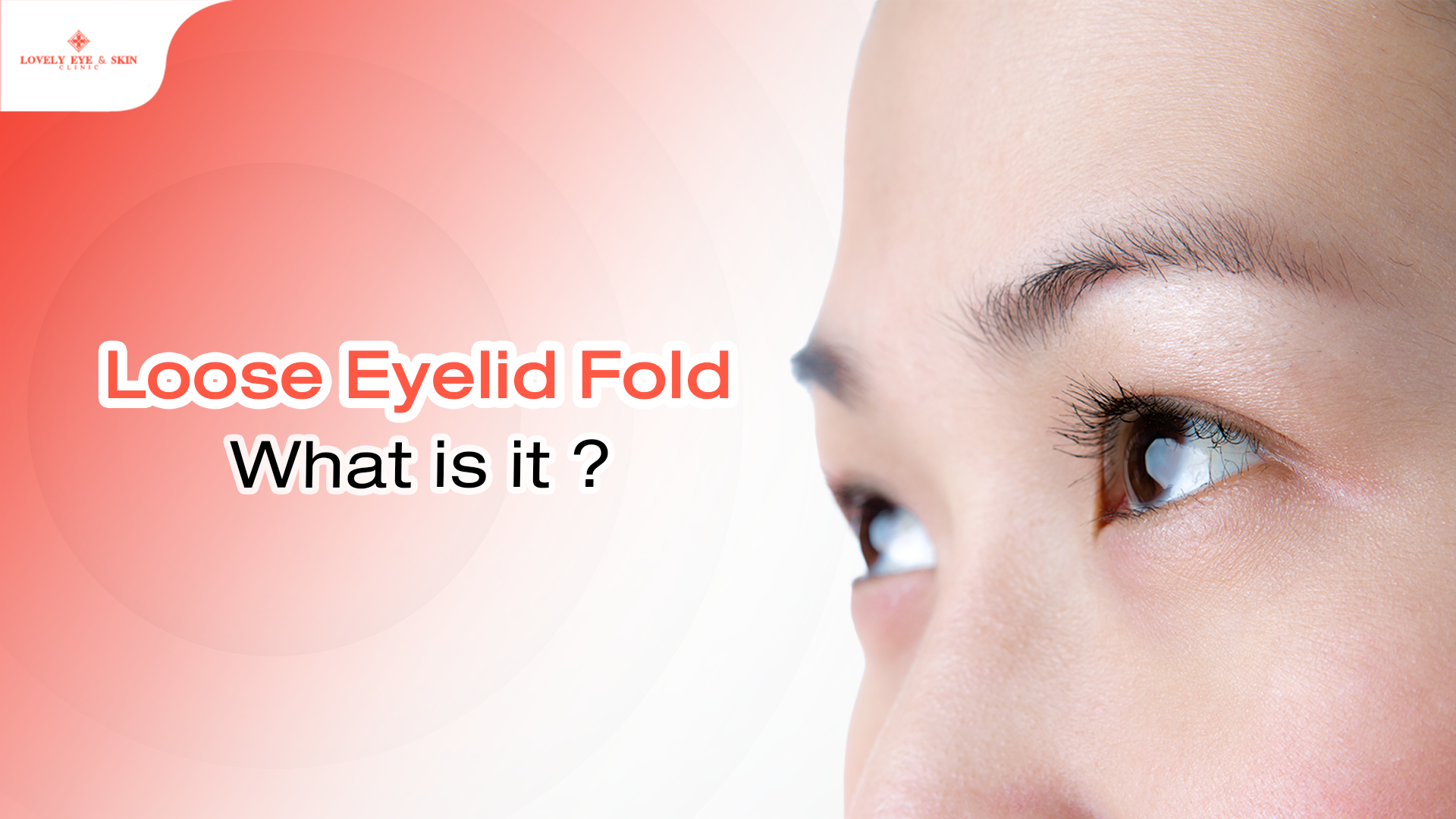
What is Loose Eyelid Fold?
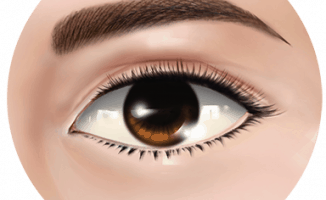
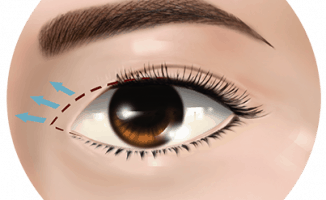
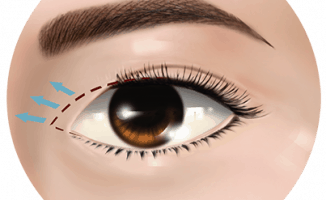
Many people may wonder what a loose eyelid fold looks like. Generally, it can be noticed when the eyelid crease no longer folds along the original surgical line, causing the crease to appear faint, uneven, or lower than its intended position. In some cases, the eyelid fold may become hidden, or the eyes may appear droopy over time.
This issue is quite common among those who had eyelid surgery before, especially three point suture technique. This may require double eyelid revision to restore a more defined and suitable eyelid crease. If you begin to notice any unusual changes, it is important to consult a doctor as soon as possible for a proper evaluation and treatment plan. Early correction can help prevent more complicated problems in the long term.
What Are the Causes of Loose Eyelid Fold?
What are the main causes of loose eyelid and are there any factors which contribute to this issues. In fact, this condition can occur for several reasons, including:
Surgical technique and surgeon's expertise
Choosing a surgical technique that is not suitable for the patient’s eye structure can increase the risk of a loose eyelid fold. For example, using a three-point suture technique without removing excess eyelid skin may lead to droopy eyelids or excess skin covering the crease. This causes the double eyelid fold to become less defined and loosen over time. In addition, if the surgeon lacks expertise or the sutures are not secured tightly enough, the eyelid fold may gradually loosen or disappear as well.
Self-care after surgery
Frequent eye rubbing or touching the wound unintentionally—especially during the recovery period when the eyes may feel itchy after double eyelid surgery—can interfere with the healing process and disrupt the eyelid crease. This may cause the fold to become uneven or gradually loosen over time. In addition, improper post-operative care, such as rubbing off eye makeup harshly or wearing contact lenses too soon, can place extra tension on the eyelids. This can even affect the long-term stability of the eyelid fold.
Sagging eye caused by aging
As we age, the skin and structures around the eyes gradually lose elasticity due to a decline in collagen and elastin. This can lead to age-related eyelid changes such as the skin to sag, fat around the eyes to shift, and the eyelid muscles to weaken. Excess skin may begin to cover the eyelid crease, making the double eyelid fold appear less defined, loosened, or even disappear over time. This is noticeable in individuals who have previously undergone double eyelid surgery. The original eyelid structure may become less capable of supporting tension with age, making changes in the eyelid fold more apparent.
How to Prevent Double Eyelid Fold from Disappearing?
When a loose eyelid fold occurs, the appropriate treatment should be determined based on the underlying cause and the condition of each individual’s eyelids. Consulting with a qualified ophthalmologist can help identify the most suitable treatment. This helps reduce the risk of recurrence. Common treatment options include:
- Re-suturing the existing eyelid fold: This is suitable for cases where the eyelid fold has only slightly loosened and the overall eyelid structure remains in good condition. The surgeon will reinforce the original crease line with additional sutures to restore a deeper and more defined eyelid fold.
- Short or long incision surgery: This approach is recommended for more complex cases, such as thick eyelid with sagging eyelid skin. The surgeon may remove excess fat and eyelid skin before designing a new eyelid crease. This will create a more balanced shape and a longer-lasting result.
- Adjust levator muscle: In cases where ptosis or weakened eyelid muscles are involved, ptosis surgery may be required to adjust the muscles responsible for lifting the eyelids. This allows the eyes to open more fully while creating a new eyelid fold, resulting in brighter, more open, and more balanced-looking eyes.
Differences Between Loose Eyelid Fold and Other Eye Concerns
Although many eye concerns can make the eyelid crease appear less defined, the underlying causes are quite different. A loose eyelid fold usually occurs when the previously created eyelid crease no longer firmly attached. This is common for individuals who have undergone double eyelid surgery before. The most noticeable signs are an eyelid crease that appears faint, uneven, or partially disappears, while the ability to open the eyes generally remains normal. In some cases, double eyelid revision surgery to correct overly large eyelid crease may be considered if the original crease shape is not well suited to the natural eye structure. On the other hand, droopy eyelids are caused by excess eyelid skin covering the eyelid crease. As a result, the eyelid crease appears smaller or hidden even though the original fold still exists beneath the skin.
Meanwhile, ptosis is related to weakened eyelid muscle. This condition can cause the eyes to look sleepy, make it difficult to fully open the eyes, or result in uneven eye opening. This is not directly caused by the eyelid fold.
Even these conditions may seem similar, the underlying causes and treatment are totally different. A proper evaluation by a experienced ophthalmologist is essential for an accurate diagnosis and to determine the most appropriate treatment approach.
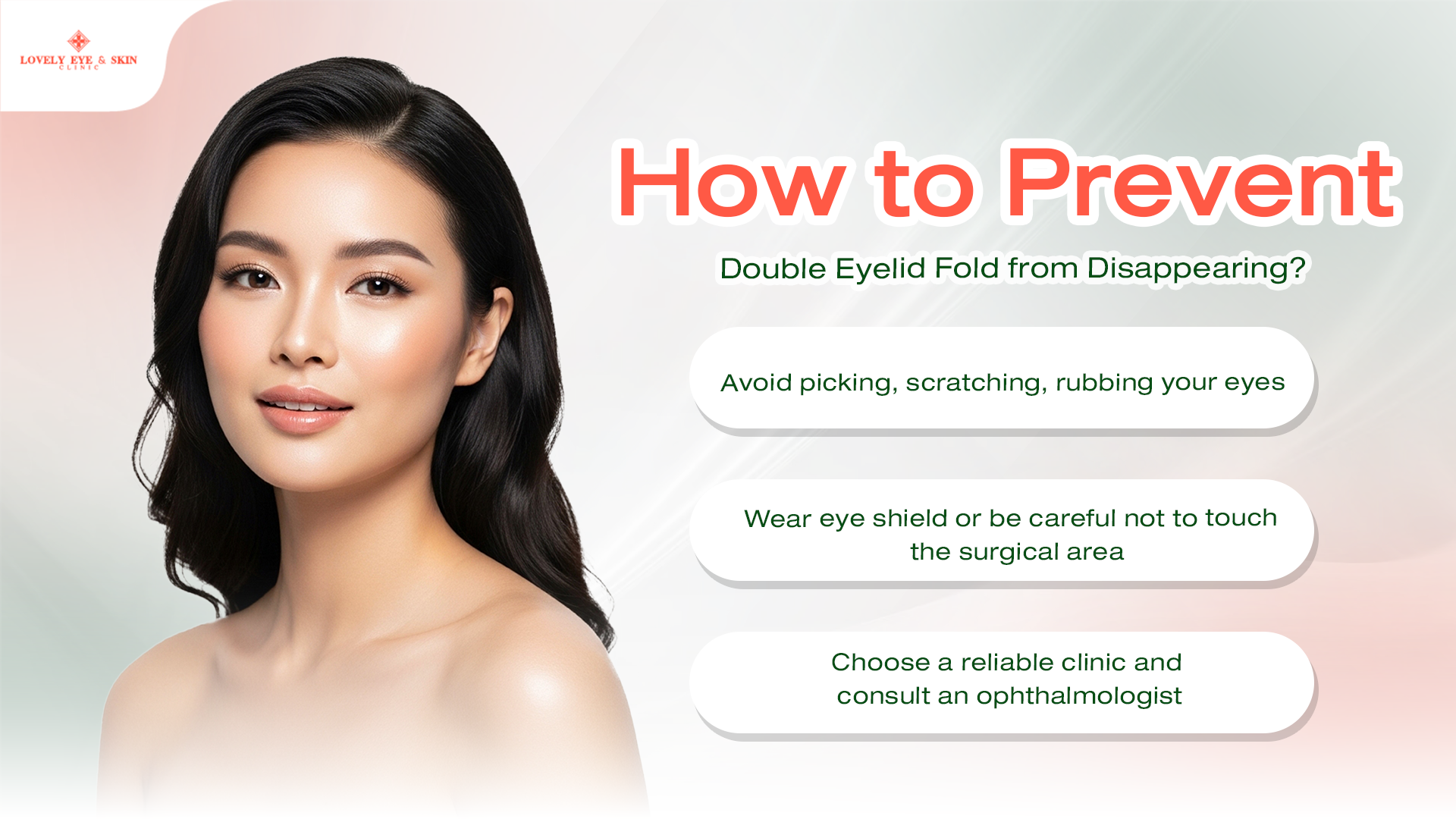
How to Prevent Double Eyelid Fold from Disappearing
To minimize the risk of a loose eyelid fold and maintain long-lasting results after eyelid surgery, proper post-operative care is significantly important. The following precautions should be strictly followed:
- After double eyelid surgery, if you experience itching or irritation, avoid picking, scratching, or rubbing your eyes, as this may disrupt the eyelid crease and cause loose eyelid fold in the future.
- While sleeping, it is recommended to wear eye shield or be careful not to touch the surgical area with your hands. This will prevent accidental irritation or pressure on the wound.
- Before surgery, it is crucial to to choose a reliable clinic and consult an ophthalmologist to examine eyelid structure select the most suitable surgical technique. This will reduce the risk of a loose eyelid fold in the long term.
For more information regarding promotion, click here @lovelyeye
Summary
A loose eyelid fold can occur due to several factors, including choosing a surgical technique that is not suitable for the eye structure, loose sutures, or gradual weakening of the eyelid structure over time. Post-operative habits such as rubbing the eyes, frequently touching the surgical area, or wearing contact lenses too soon can also increase the risk. In addition, aging may cause the eyelid skin to sag and place pressure on the eyelid crease, making the fold appear less defined or loosened over time.
Therefore, an evaluation by an experienced specialist is essential to accurately identify the cause and provide the most appropriate treatment. For those considering double eyelid surgery or revision surgery, Lovely Eye & Skin Clinic specializes in eyelid surgery using Dr. Roungkaw Technique developed by Dr. Nutthamanee Siripakkaphant (Medical License No. 35780), together with the Lovely Specialist medical team. The clinic focuses on designing eyelid creases tailored to each individual while providing continuous care for natural-looking results.
Frequently-Asked Questions (FAQ) About Causes of Loose Eyelid Fold
To help you better understand the causes, symptoms, and proper care for a loose eyelid fold, here are some of the most frequently asked questions, along with explanations to help you visualize the condition and make informed decisions more confidently.
Is double eyelid revision surgery more complicated than the first Surgery?
Double eyelid revision surgery is generally more complex than the first procedure because scar tissue, adhesions, and previously altered eyelid structures are already present. The surgeon must carefully assess the existing tissue layers and the original eyelid crease in detail in order to plan the most suitable correction approach. However, if the underlying cause is accurately identified and properly treated, the results can still look beautiful and natural.
How many times double eyelid surgery can be performed, is there any drawbacks?
Double eyelid revision surgery can be performed more than once. However, it is generally recommended to wait about 6 months to 1 year after the previous surgery to allow the tissues and incision to heal properly. Repeated revisions without necessity are not advised, as each surgery can create additional scar tissue and adhesions, making the eyelid tissues thinner and more difficult to reconstruct in the future. Careful planning during revision surgery is therefore very important to help reduce long-term risks and achieve more stable, natural-looking results.
Should you undergo treatment immediately to fix loose eyelid fold?
If you recently had surgery, it is best to wait until the incision has healed and the swelling has gone down before evaluating whether the eyelid fold has truly loosened or if it is only a temporary condition. However, if enough time has passed and the eyelid crease does not return, you should consult a doctor for a detailed assessment of the underlying cause. Correcting the issue at the right time can help improve the outcome and reduce the risk of recurrence.

Information provided by Dr. Roungkaw Lovely Eye, Dr. Nuttamanee Siripakkaphant (Medical License No. 35780).
Who pioneer Roungkaw Technique since 2010, co-founder of Lovely Eye & Skin Clinic in 2014