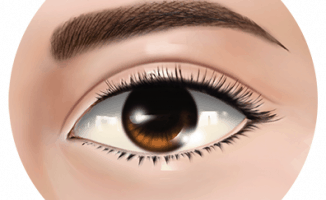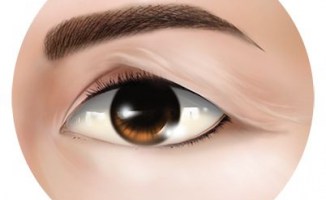



Key Takeaway
- Before undergoing double eyelid surgery, observe your eye concerns, gather comprehensive information, understand the available surgical techniques, prepare questions for your consultation, avoid medications or supplements that affect blood clotting, and make sure you are physically and mentally prepared for the procedure.
- Important precautions before double eyelid surgery include stopping blood-thinning medications at least one week before the procedure and avoiding supplements, vitamins, alcohol, and smoking for at least two weeks prior to surgery. These measures help reduce the risk of excessive bleeding, bruising, and swelling.
- After double eyelid surgery, apply cold compresses during the initial recovery period to minimize swelling, sleep with your head elevated, keep the incision area completely dry during the first week, and follow your surgeon’s instructions regarding medication use and wound care carefully.
- Foods to avoid during the first 2–4 weeks after surgery include fermented foods, raw or undercooked foods, seafood, and all alcoholic beverages, as they may interfere with the healing process and increase the risk of complications.
When deciding to undergo double eyelid surgery, one of the most important steps is proper preparation. To ensure a smooth surgical experience and recovery, it is recommended to maintain good overall health, avoid medications and supplements that may interfere with blood clotting for at least two weeks before the procedure, refrain from wearing eye makeup, and avoid alcohol and smoking. Getting adequate rest is also essential for optimal healing. In addition, there are several other precautions to consider to help achieve the best possible outcome and create eyelids that complement your unique facial features. In this article, we’ll cover everything you need to know before double eyelid surgery.
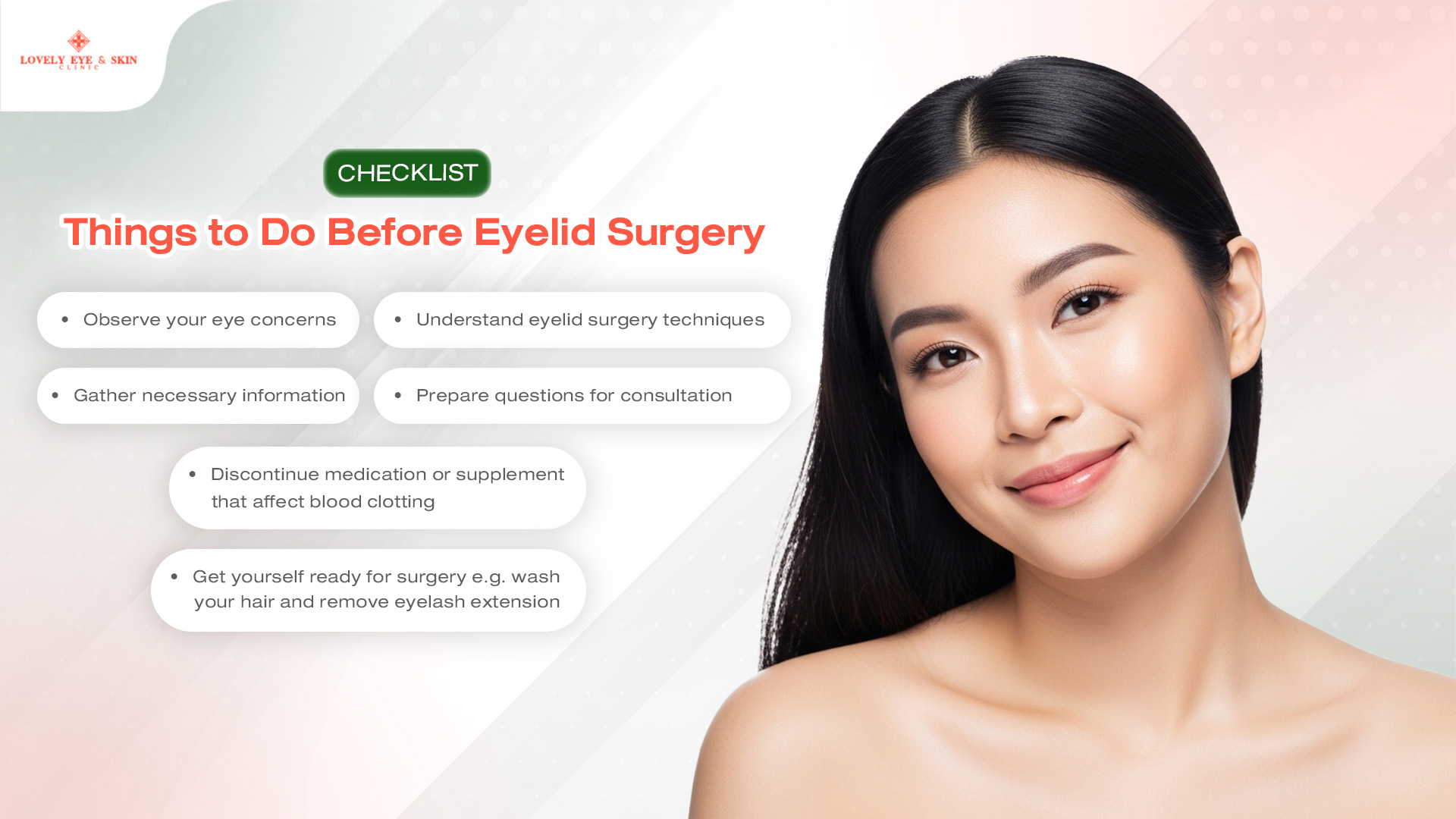
Checklist: Things to Do Before Eyelid Surgery
1. Observe your eye concerns
Carefully observe your eye concerns before surgery. You can do this by looking in the mirror, taking selfies from different angles, or asking for feedback from people you trust. It is recommended to assess your eyes both with and without makeup, paying particular attention to their natural appearance. For the most accurate evaluation, examine your eyes without makeup, contact lenses, or double eyelid tape. This allows you and your surgeon to better assess your eyelid structure and identify any underlying concerns more clearly.
2. Gather necessary information
Gather comprehensive information about double eyelid surgery before making a decision. Once you have a clear understanding of your eye characteristics and concerns, compare them with before-and-after photos from reputable clinics to gain a preliminary idea of the issues that may need correction, the techniques that could be suitable for your case, and the type of results you can realistically expect. In addition, take the time to thoroughly research the clinic and surgeon you are considering, including their qualifications, experience, and patient reviews, before proceeding with surgery.
3. Understand eyelid surgery techniques
Eyelid surgery involves much more than simply creating a double eyelid crease. There are a variety of specialized procedures designed to address different concerns, including inner corner epicanthoplasty (inner corner eye extension), levator muscle adjustment for ptosis correction, brow lift surgery, fat grafting, and lower eyelid bag removal. These procedures can often be combined with double eyelid surgery to achieve more balanced and comprehensive results.
If your initial assessment suggests that your concerns extend beyond the eyelid crease itself, it is advisable to choose a clinic or surgeon with expertise in multiple eyelid and periocular techniques. A comprehensive treatment plan can help address all underlying issues in a single procedure, maximize aesthetic outcomes, and reduce the likelihood of requiring revision surgery in the future.
4. Prepare questions for consultation
Before your consultation, take some time to identify your aesthetic goals and the type of eyelid crease you would like to achieve. Bringing reference photos of your preferred eye shape can help communicate your expectations more clearly. It is also helpful to prepare a list of questions and concerns to discuss with your surgeon. During the consultation, the surgeon will evaluate the feasibility of your desired outcome while carefully analyzing your unique eye anatomy and facial features to recommend the most suitable approach.
In addition, it is essential to provide your surgeon with a complete medical history, including any underlying health conditions, medication allergies, and current medications you are taking. Sharing this information in detail allows the surgeon to assess your suitability for surgery, minimize potential risks, and develop the safest and most effective treatment plan for your individual needs.
5. Discontinue medication or supplement that affect blood clotting
Before undergoing surgery, it is important to prepare your body properly to help reduce the risk of excessive bleeding, bruising, and swelling during the recovery period. Certain medications and substances that affect blood clotting and circulation should be discontinued before the procedure as instructed by your surgeon. Prescription medications for chronic conditions, such as high blood pressure or diabetes, can generally be continued as directed. However, if you are unsure whether a medication should be stopped, always consult your surgeon or healthcare provider beforehand.
Examples of medications that are commonly recommended to be avoided for at least one week before double eyelid surgery include:
- Aspirin
- Ibuprofen
- Naproxen
6. Get yourself ready for eyelid surgery
As part of your preparation for double eyelid surgery, it is recommended to wash your hair in advance, as the surgical area should be kept dry and protected from water during the first week of recovery. On the day of the procedure, avoid wearing makeup and remove any false eyelashes to maintain proper hygiene and reduce the risk of infection. If you wear contact lenses, be sure to bring your prescription glasses, as contact lens use is typically discouraged for at least two weeks after surgery to allow the eyelids to heal properly.
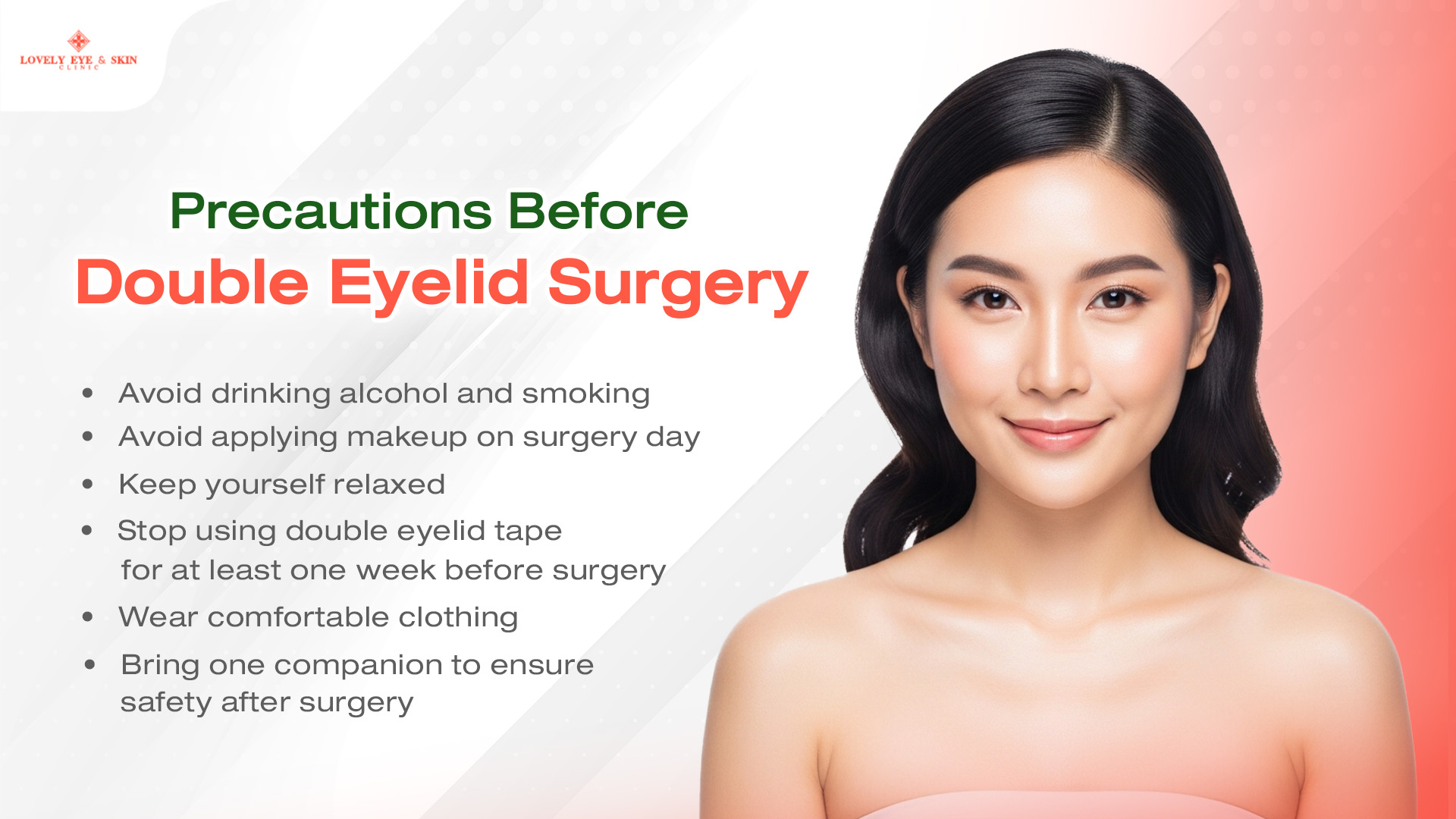
Precautions Before Double Eyelid Surgery
-
Avoid alcohol consumption and smoking for at least two weeks before surgery. Smoking can increase the risk of infection and delay wound healing by impairing collagen production, which is essential for tissue repair.
-
Avoid makeup on surgery day. Keeping the face clean helps reduce the risk of infection and allows the surgical team to properly cleanse the skin around the eyes. Light makeup or no makeup at all is recommended.
-
Stay relaxed and get adequate rest. Ensure that you are well-rested before the procedure, and consider engaging in relaxing activities to help your body and mind prepare for surgery.
-
Stop using double eyelid tape at least one week before surgery. This helps prevent temporary changes in eyelid shape that may interfere with surgical planning and allows the surgeon to accurately design the eyelid crease.
-
Wear comfortable clothing that is easy to put on and remove. A button-up shirt is recommended to avoid pulling clothing over your head, which could accidentally disturb the surgical area after the procedure.
-
Bring a companion with you. Having a family member or friend accompany you is recommended to help ensure your safety and provide assistance after surgery.
Food to Avoid Before and After Eyelid Surgery
-
Avoid fermented and pickled foods, such as shrimp paste, fermented fish products, fermented pork, pickled vegetables, and pickled fruits. These foods may contribute to inflammation and potentially interfere with the healing process.
-
Avoid seafood, including shrimp, crab, shellfish, and squid, especially if you have a history of food allergies or sensitivities. In some individuals, these foods may trigger itching or worsen post-operative swelling.
-
Avoid spicy foods and foods high in sodium. Excess sodium can cause water retention and prolong swelling, while very spicy foods may increase perspiration and irritation during the recovery period.
-
Refrain from consuming alcoholic beverages. Alcohol can increase blood circulation, which may worsen bruising and swelling and potentially delay the healing process.
-
Avoid raw or undercooked foods, such as sushi, raw meat dishes, and other foods that may carry bacteria. This helps reduce the risk of infection and inflammation during recovery.
-
Limit greasy and heavily fried foods. Some surgeons also recommend avoiding foods that may contribute to inflammation during the initial healing period. Maintaining a balanced, nutrient-rich diet can help support optimal recovery and wound healing.
Self-Care Tips After Double Eyelid Surgery
-
Take all prescribed medications exactly as directed by your surgeon. This helps prevent infection and supports a smooth recovery process.
-
Apply cold compresses within the first 24 hours after surgery and continue during the first three days if mild bleeding or oozing occurs. Cold compresses can help control bleeding and reduce initial swelling.
-
Pause compresses on days 4–5, then switch to warm compresses starting on day 6 after surgery. Warm compresses may help reduce bruising and promote circulation. Be careful not to let water come into direct contact with the incision site.
-
Sleep with your head elevated using extra pillows or a neck pillow. Elevating your head can help improve drainage and minimize swelling and bruising around the eyes.
-
Wear protective glasses or sunglasses when outdoors. This helps shield your eyes from dust, debris, wind, and sunlight that may cause irritation during the healing period.
-
Avoid vitamins, dietary supplements, coffee, fermented foods, seafood, smoking, and alcohol for at least two weeks after surgery. These substances may interfere with the healing process or contribute to swelling and inflammation.
-
Avoid strenuous activities, heavy lifting, and frequent bending over. These activities can increase blood pressure and potentially affect the surgical site.
-
Apply the prescribed ointment to the incision area as instructed by your surgeon. Before reapplying, gently clean away any residual ointment to keep the area clean and promote proper healing.
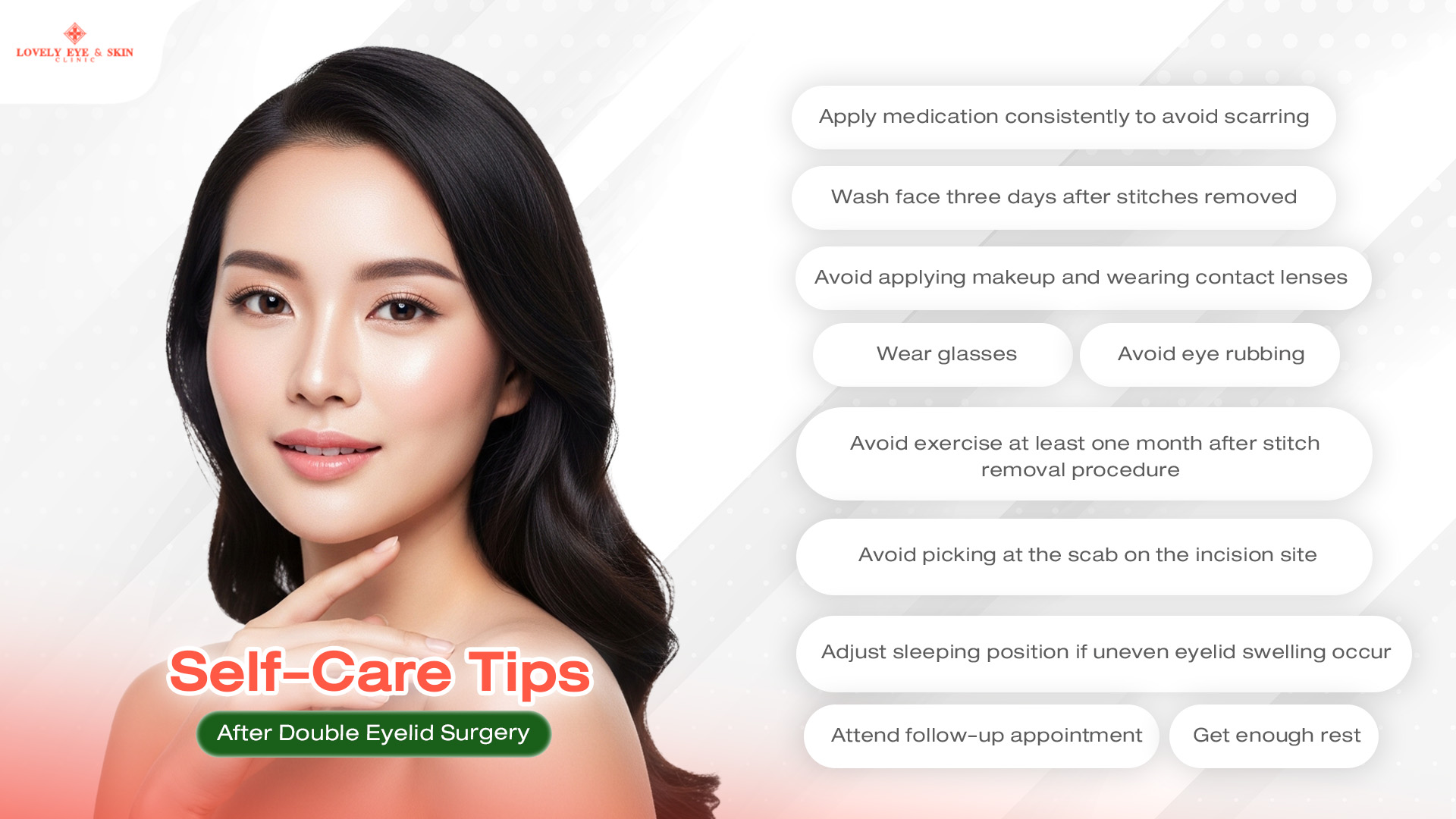
Self-Care Tips After Stitches Removal Procedure
- ทายารักษารอยแผลเป็นอย่างต่อเนื่อง ตามที่แพทย์แนะนำ หลังตัดไหมครบ 9 วัน
- ระมัดระวังการขยี้ตาแรง เพราะอาจส่งผลกระทบต่อชั้นตาได้ โดยเฉพาะการผ่าตัดเปิดหัวตา
- เริ่มล้างหน้าตามปกติได้หลังตัดไหม 3 วัน โดยควรทำความสะอาดบริเวณแผลอย่างเบามือ
- งดแต่งหน้ารอบดวงตาและคอนแทกต์เลนส์ เพื่อให้แผลดีขึ้น
- ใส่แว่นตา เพื่อป้องกันฝุ่น ลม และแสงแดด
- งดออกกำลังกายหลังตัดไหม 1 เดือน โดยสามารถเริ่มทำกิจกรรมทางกายต่างๆ ได้ตามความเหมาะสมหลังผ่านช่วงเวลานี้ไปแล้ว และขึ้นอยู่กับหัตถการที่ทำและการหายช้าเร็วของแต่ละเคส
- ห้ามแกะหรือดึงสะเก็ดแผล เพราะอาจทำให้เกิดรอยแผลเป็นได้
- ติดตามแผลหลังผ่าตัดตามนัด หากพบรอยแผลเป็นนูนในช่วงแรกถือเป็นเรื่องปกติและจะค่อยๆ ดีขึ้นเอง
- ปรับท่านอนหากมีอาการตาบวมไม่เท่ากัน แนะนำให้นอนตะแคงโดยเอาตาข้างที่บวมกว่าขึ้นด้านบนเพื่อลดอาการบวม หากงดนอนตะแคงได้จะดีที่สุด
- พักผ่อนให้เพียงพอ
What Results Can You Expect After Surgery
After preparing for double eyelid surgery and completing the recovery process, many people naturally wonder what their final results will look like. The outcome varies from person to person because factors such as eye anatomy, skin thickness, the amount of eyelid fat, and overall facial proportions are unique to each individual. As a result, the ideal eyelid crease is not the same for everyone; rather, it should be designed to complement each person's natural features and facial structure.
One of the most important factors in achieving satisfying results is having a thorough consultation before surgery. Clearly communicating your goals and expectations, while also listening to your surgeon’s professional assessment, helps establish realistic expectations and ensures that both you and your surgeon share the same vision. This collaborative approach allows the surgeon to select the most appropriate technique and create an eyelid crease that enhances facial harmony while maintaining a natural-looking appearance.
Common Symptoms After Eyelid Surgery
-
Swelling and bruising around the eyes are most noticeable during the first three days after surgery and typically improve gradually within 7–14 days.
-
Difficulty fully closing the eyes during the first 1–2 weeks may occur due to eyelid tightness and swelling. This is usually temporary and resolves as the swelling subsides and the tissues heal.
-
Temporary numbness of the eyelids is a common post-operative symptom. Sensation generally returns gradually as the healing process progresses.
-
Minor bleeding beneath the white part of the eye (subconjunctival hemorrhage) or an eyelid crease that appears unclear or uneven in the early stages of recovery can occur and is generally part of the normal healing process.
-
Dry eyes and eye irritation may develop after surgery. These symptoms can often be relieved by using artificial tears as recommended by your surgeon.
-
Thick-looking or uneven eyelid crease during the first 1–3 months is normal, as the tissues require time to heal and settle. The eyelids typically become more natural-looking and refined within 6 months to 1 year after surgery.
Summary
Achieving beautiful double eyelids starts with carefully identifying your eye concerns and choosing the most suitable surgical technique. Proper preparation is equally important, including avoiding medications, vitamins, certain foods, alcohol, and smoking for at least two weeks before surgery. On the day of the procedure, wash your face thoroughly and bring your prescription glasses if needed. After surgery, follow your surgeon’s post-operative instructions closely, including applying cold and warm compresses as recommended and using scar-reduction ointment after suture removal. Proper aftercare helps promote optimal healing and supports the best possible aesthetic outcome.
Although it is common to experience swelling, bruising, or temporary asymmetry of the eyelids during the early stages of recovery, these conditions typically improve over time. The eyelids gradually settle into a more natural and refined appearance, with final results generally becoming apparent within 6 months to 1 year. The outcome will vary depending on each individual's natural eye anatomy and healing process.
At Lovely Eye & Skin Clinic, we specialize in eyelid surgery and personalized eyelid design tailored to each patient’s facial features. Our experienced team carefully plans every procedure to achieve balanced, natural-looking results. In addition, the Lovely Special Care Team provides close post-operative monitoring and support throughout the recovery journey, helping patients achieve beautiful results that enhance their unique appearance.
Frequently-Asked Questions (FAQ) About Preparation Before Eyelid Surgery
How many days you should apply cold compress after eyelid surgery?
After double eyelid surgery, it is important to apply cold compresses consistently during the first three days of recovery. Cold compresses can help minimize bleeding, reduce swelling, and lessen bruising around the eyelids. It is recommended to apply a cold compress for 15–20 minutes at a time, followed by a short break before repeating. This can be done frequently throughout the day to help promote a more comfortable recovery.
How long does swelling last after eyelid surgery?
Swelling is typically most occur during the first 3–5 days after double eyelid surgery and gradually subsides over the following 1–2 weeks. In most cases, surgeons schedule suture removal between 7–10 days after the procedure, when the incision has begun to heal properly. As recovery progresses, the eyelid crease continues to settle and refine, with a more natural appearance becoming visible over the next 1–3 months. The speed of healing varies from person to person and depends on factors such as individual healing response, surgical technique, and adherence to post-operative care instructions.
Is coffee allowed after eyelid surgery?
It is recommended to avoid coffee and all caffeinated beverages for at least 1–2 weeks after double eyelid surgery. Caffeine can stimulate heart activity and increase blood circulation, which may lead to elevated blood pressure and potentially increase the risk of bleeding around the surgical site. As a result, the healing process may be prolonged, and recovery may not progress as smoothly as expected. Limiting caffeine intake during the early recovery period can help support optimal wound healing and reduce the risk of post-operative swelling and complications.
How many days after eyelid surgery you can eat eggs?
After double eyelid surgery, patients are often advised to avoid eggs approximately 1–4 weeks, or until the incision has fully healed and the sutures have been removed. Although eggs are an excellent source of protein that can support tissue repair and wound healing, some individuals choose to avoid them during the initial recovery period for peace of mind and to minimize the risk of itching or discomfort around the surgical site.

Information provided by Dr. Roungkaw Lovely Eye (Nutthamanee Siripakkaphant, M.D. Medical Licese No. 35780)
She pioneered Dr. Roungkaw Technique since 2010 and serves as co-founder of Lovely Eye & Skin Clinic