



Key Takeaway
-
Stitch removal is the process of removing stitches once the wound has healed properly. It is typically done around 5–7 days after surgery. Removing the stitches helps reduce irritation and allows the wound to continue healing naturally.
-
For self-care after stitch removal, it is important to wash your face gently, apply medication as prescribed by your doctor, and avoid rubbing the wound, bending down for long periods, or strenuous activities. These precautions help reduce swelling and minimize the risk of scarring.
-
After stitch removal, it is recommended to eat easy-to-digest, high-protein foods and drink plenty of water. Spicy foods, alcohol, and fermented or pickled foods should be avoided. These actions can help support faster healing and reduce inflammation.
Besides strict post-operative care during the initial recovery period, post–stitch removal care is considered an important step. This stage is when the incision is healing, swelling gradually subsides, the eyelid skin begins to recover, and the eyelid crease starts to settle into shape. During this time, your daily activities, rest, and eyelid care can directly affect the final appearance and symmetry of the eyelids.
By following proper care tips, it helps the eyelid crease heal faster, look more natural, and reduce the risk of long-term complications. Let’s explore how to properly care for yourself after stitch removal.
What is Stitch Removal?
Stitch removal is a procedure performed by cosmetic eyelid surgeon to remove stitches from the incision site. Generally, it would be around 9-10 days after surgery, depending on surgical procedures and healing process of each individual. In terms of double eyelid surgery, stitch removal reduces irritation caused by sutures and allows eyelid skin to recover naturally.
This procedure usually takes only a short time and may cause only slight tightness or mild discomfort. After stitch removal, the wound will continue to heal, swelling will gradually subside, and the eyelid crease will begin to settle into shape. This is an important stage that requires proper aftercare to help the incision heal smoothly and achieve the best long-term results.
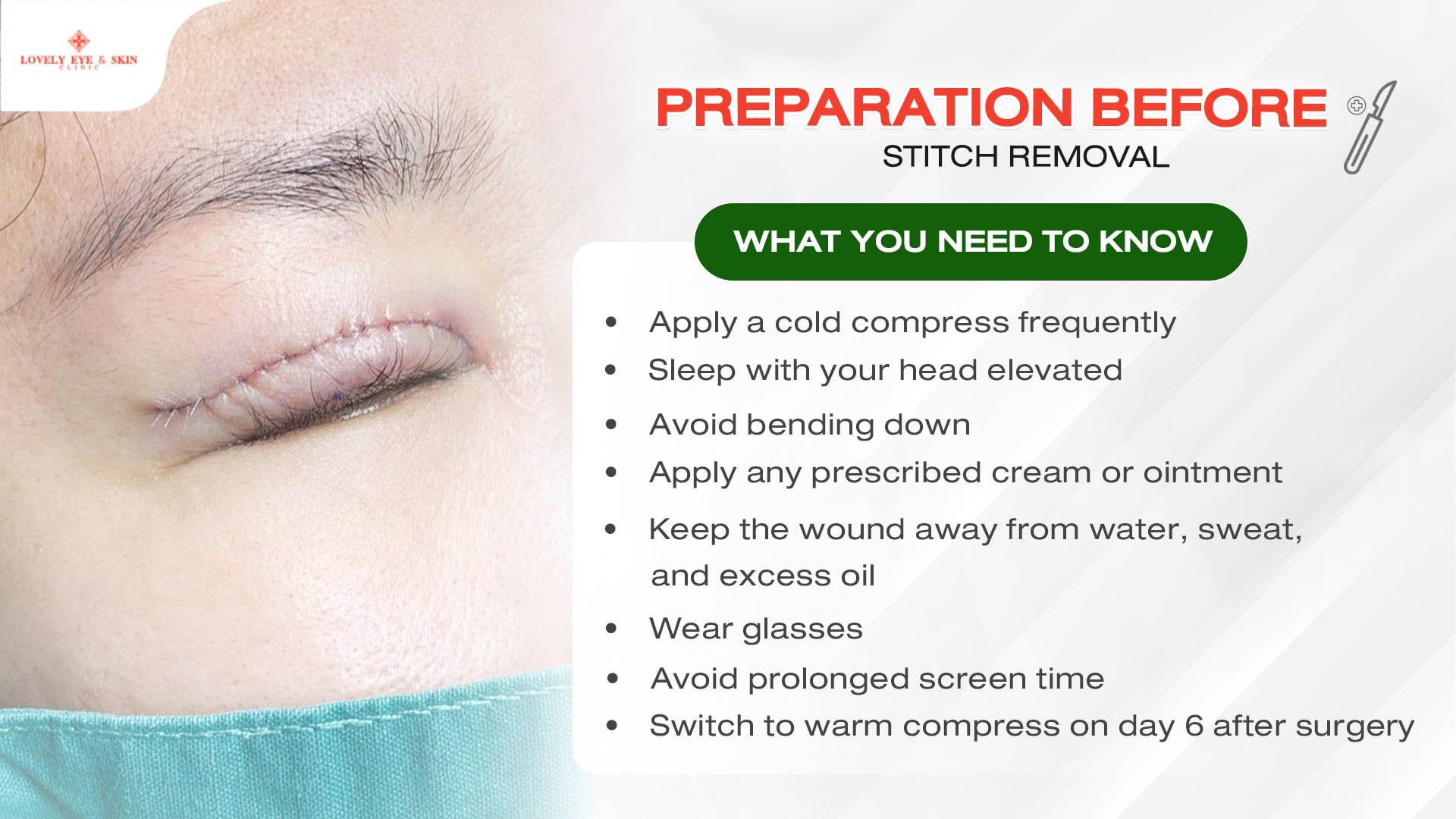
How to Prepare Yourself Before Stitch Removal?
- Apply a cold compress frequently to help reduce swelling and tightness around the eyelids.
- Sleep with your head elevated instead of lying flat to minimize swelling.
- Avoid bending down, straining, or coughing and sneezing forcefully to help prevent bleeding at the incision site.
- Take all prescribed medications on time as directed by your doctor.
- Apply any prescribed cream or ointment to the incision according to medical advice to support faster healing.
- Be careful to keep the wound away from water, sweat, and excess oil, especially before stitch removal.
- Wear glasses even when you stay indoor to protect your eyes from dust.
- Avoid prolonged screen time to reduce eye strains.
- Starting from day 6 after surgery, warm compresses may be applied to help the swelling subside more quickly.
When Can the Incision Get Wet After Stitch Removal?
About 3 days after stitch removal, you can usually allow the incision area to come into contact with water and gently wash your face. However, you should cleanse the face carefully and avoid rubbing, scrubbing, or applying pressure around the eyelids. Use clean water and gentle skincare products, then pat the skin dry softly.
If there are still scabs or tightness around the incision, avoid letting water directly contact the wound. Always follow your doctor’s recommendations to help prevent infection and support proper healing.
Preparation Before Double Eyelid Revision
Double eyelid revision is a surgery that requires more precision than the first procedure. Proper preparation before surgery is important to reduce complications which may occur.
-
Consult your doctor and clearly explain your concerns and desired results.
-
Avoid smoking and alcohol for at least 1–2 weeks before surgery.
-
Stop certain medications and supplements, such as aspirin, vitamin E, and fish oil, as advised by your doctor.
-
Get enough rest and maintain good health before the surgery date.
-
On the day of surgery, avoid wearing makeup, applying skincare products, or using contact lenses.
-
Inform your doctor if you have any underlying medical conditions, drug allergies, or a history of previous eye surgery.
-
Prepare time off for recovery and plan your transportation after surgery in advance.
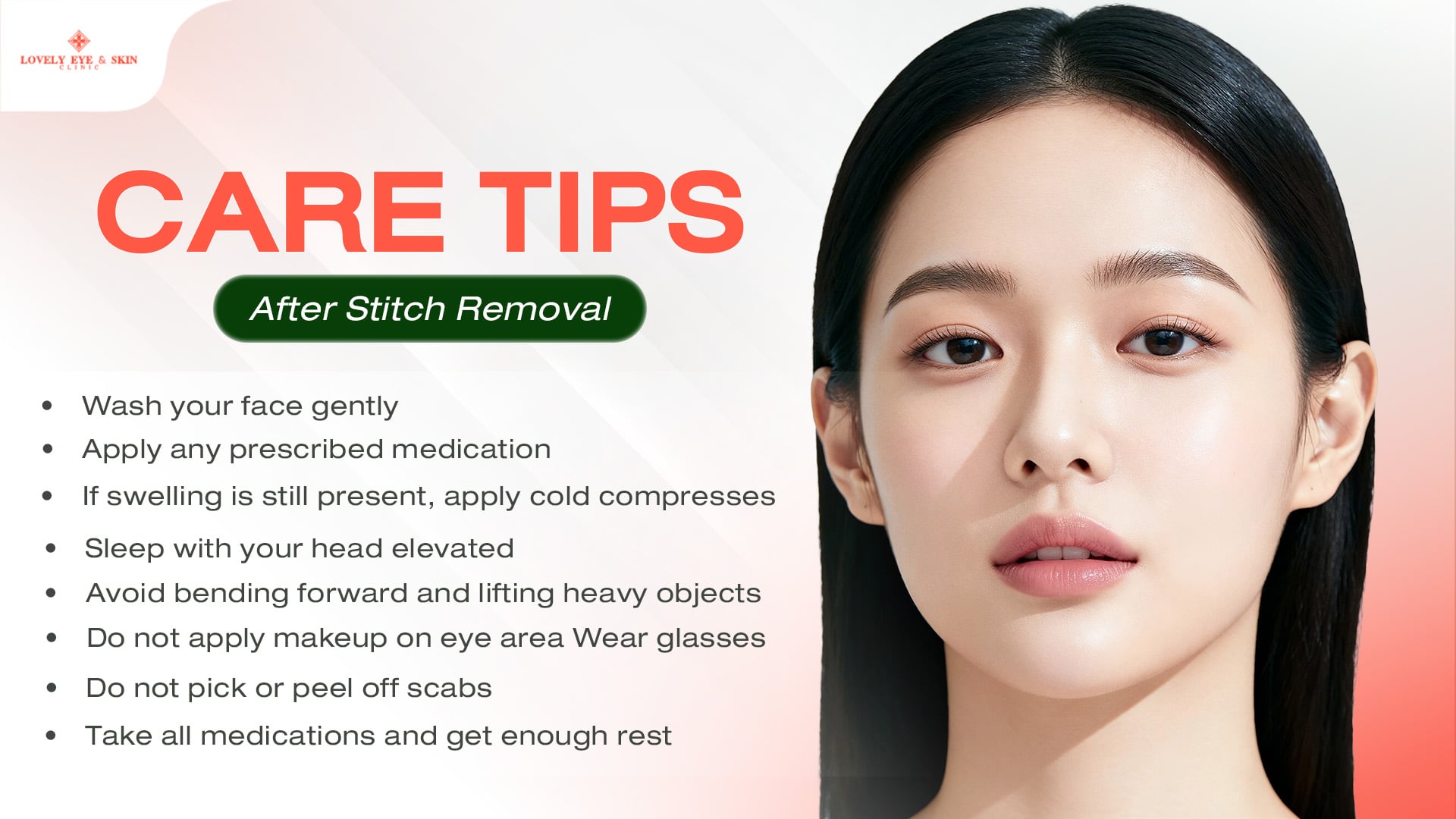
Self-Care Tips After Stitch Removal
Proper aftercare following stitch removal is important to help the incision heal properly, reduce swelling, and minimize the risk of scarring. Here are some important dos and don’ts after stitch removal.
-
Wash your face gently and avoid rubbing or scrubbing the incision area.
-
Apply any prescribed medication or ointment as directed by your doctor to support faster healing.
-
If swelling is still present, apply cold compresses, before switching to warm compresses according to your doctor’s recommendations.
-
Sleep with your head elevated instead of lying flat.
-
Avoid bending forward, lifting heavy objects, or strenuous activities.
-
Do not apply makeup around the eyes.
-
Wear glasses to protect the eyes from dust, wind, and sunlight.
-
Do not pick or peel off scabs, as this may increase the risk of scarring.
-
Take all medications as prescribed and get enough rest to promote faster recovery
What Foods Should Be Avoided After Stich Removal?
After double-eyelid stitch removal, choosing appropriate foods can help the wound heal properly, reduce swelling, and prevent inflammation. Let's take a look at what you can eat after getting stitches removed.
-
Avoid strongly flavored foods such as very spicy or salty foods, as they may increase swelling around the incision.
-
Fermented or pickled foods, such as fermented fish, kimchi, and pickled foods, should also be avoided because they may increase the risk of inflammation.
-
Alcoholic beverages should be avoided, as alcohol can slow wound healing and worsen swelling.
-
Certain types of seafood may cause itching or irritation in people with allergies or sensitive skin. Fried and greasy foods may also contribute to inflammation and slower recovery.
-
Raw or undercooked foods, such as sashimi or raw minced meat dishes, may increase the risk of infection.
-
Certain herbs and supplements, including ginseng, garlic extract, and fish oil, should also be avoided unless approved by your doctor.
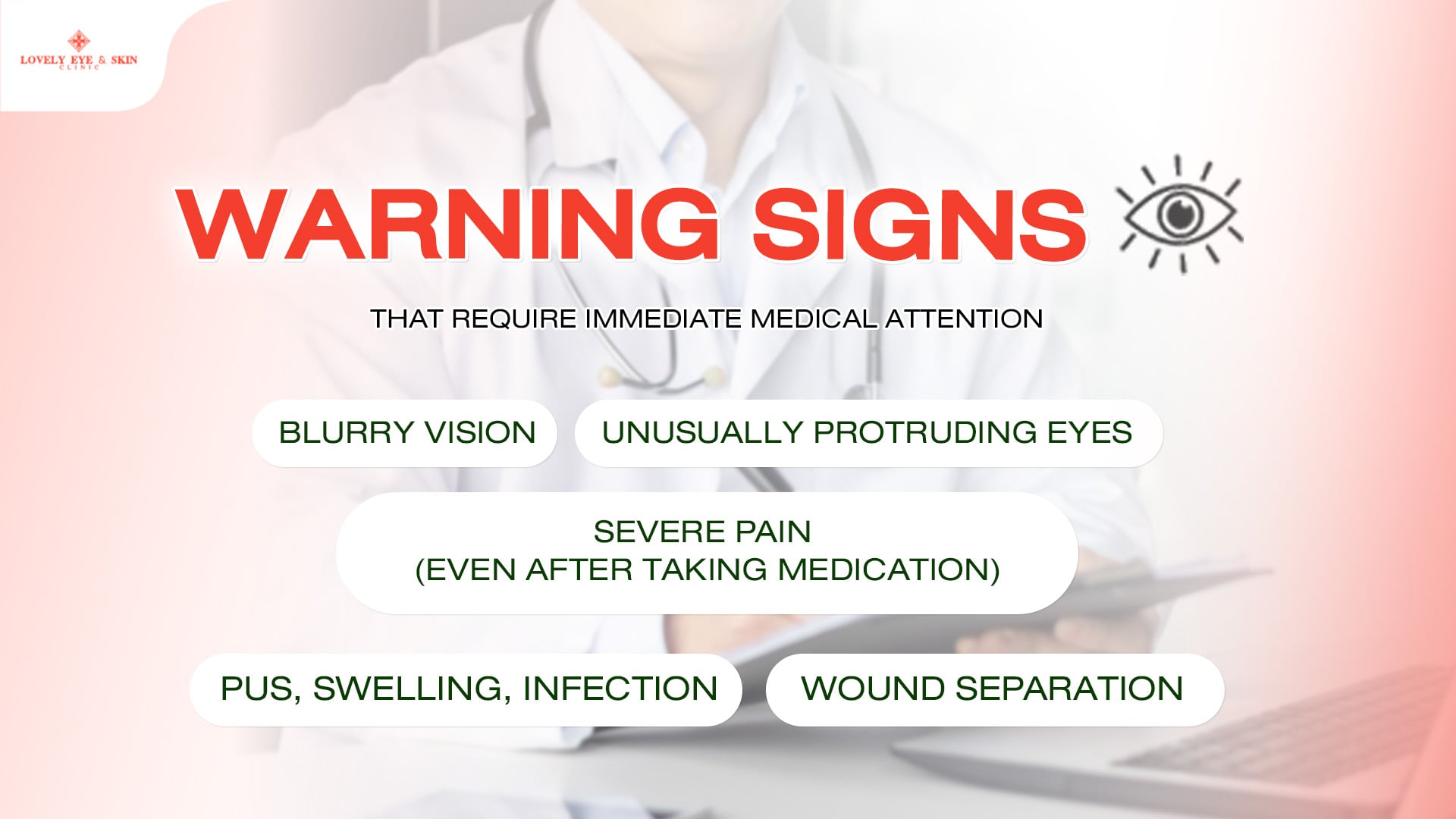
Warning Signs That Require Immediate Medical Attention
From the period after double eyelid surgery through stitch removal, some symptoms are common and usually improve on their own without cause for concern. However, certain symptoms may be warning signs that require immediate evaluation by an ophthalmologist, such as:
Blurry vision
Try observing your vision by covering one eye at a time. If ointment applied to the incision accidentally gets into the eye, it may cause slightly blurred vision in one eye. In the early stage after double eyelid surgery, some people may also be unable to fully close their eyes, which can lead to eye irritation, blurred vision, watery eyes, or a burning sensation similar to having dust in the eye.
Unusually protruding eyes
Eyelid retraction occurs when the eyelid is pulled back excessively, causing the eyes to appear unusually wide or protruded. This condition may also prevent the eyes from closing completely, leading to dryness, irritation, or blurred vision. It may result from excessive skin removal or improper surgical and suturing techniques.
Severe pain (even after taking medication)
Mild pain or tightness around the incision is common during the early recovery period and can usually be improved after taking medication. However, if the pain becomes unusually severe or does not improve after taking medication, you should contact doctor or staff at the clinic immediately.
Pus, swelling, or signs of infection
An infected incision may appear swollen, red, warm, and especially tender in certain areas. There may also be pus, discharge, or an unusual odor coming from the wound. These symptoms commonly occur within the first 2–3 days after surgery, and some patients may also develop a fever.
Wound separation
Incision separation can occur if the stitches come loose, causing the surgical wound to reopen. This is often related to accidental rubbing or impact to the area, frequent bending forward, or forceful coughing or sneezing after surgery. Wearing an eye shield as recommended can help protect the incision and reduce the risk of wound separation.
Summary
After double eyelid stitch removal, the incision is still healing and the eyelid crease is beginning to settle into shape. Proper aftercare is important and includes gently washing the face, applying medication as prescribed, getting enough rest, sleeping with the head elevated, and avoiding rubbing the incision, bending down, or strenuous activities. These precautions help reduce swelling and prevent the wound from reopening. Spicy foods, alcohol, and fermented foods should also be avoided during recovery.
Mild symptoms such as swelling, bruising, or slight blurred vision can usually be monitored. However, if you experience severe pain, increased redness and swelling, pus, or wound separation, you should seek medical attention immediately. Proper care can help the incision heal smoothly, minimize scarring, and support the best long-term results.
For those considering double eyelid surgery or revision, Lovely Eye & Skin Clinic provides care by an ophthalmologist specializing in eye surgery, with attentive support from pre-surgery consultation through post–stitch removal recovery to help achieve natural-looking and safe results.
Frequently-Asked Questions (FAQ) About Self-Care After Stitch Removal
Here are answers to some of the most common questions about post–double eyelid surgery care. Understanding how to properly care for yourself during recovery can help reduce anxiety, support proper healing, and allow the eyelid crease to settle naturally.
How many days after stitch removal does the wound fully heal?
After stitch removal, the incision will usually begin to heal more noticeably within about 7–14 days. Swelling and tightness will gradually decrease, while the incision scar will continue to fade over time. In general, the eyelid crease will start to settle into a more defined shape within 1–3 months. However, recovery time may vary from person to person depending on individual healing ability and post-operative care.
How many days of recovery are needed after stitch removal?
You can generally return to your normal daily routine without requiring a long recovery period. However, recovery may vary depending on the individual and the surgical technique used. After stitch removal, it is recommended to avoid activities that heavily strain the eyes or involve strenuous physical activity during the first 1–2 weeks.
Getting adequate rest and following your doctor’s aftercare instructions can help support faster healing and reduce the risk of complications.
After stitch removal procedure, when is exercise allowed?
After stitch removal, strenuous exercise or activities that cause excessive sweating should generally be avoided for about 1–2 weeks. However, recovery time may vary depending on the individual and the surgical technique used, and in some cases, activity restrictions may last up to 1 month.
Light activities such as slow walking can usually be resumed once the incision has healed well and there is no significant swelling, redness, or pain. You can then gradually return to your normal exercise routine. However, it is recommended to consult your doctor before resuming exercise.

Information provided by Dr. Roungkaw Lovely Eye - Nutthamanee Siripakkaphant, M.D. Medical License No.35780
who pioneered Dr. Roungkaw Technique since 2010 and serves as co-founder of Lovely Eye & Skin Clinic