

 Key Takeaway
- Droopy eyelid after Botox program is a side effect caused when Botox affects the muscles that lift the upper eyelid, leading to temporary muscle weakness. This can result in sleepy-looking eyes, drooping eyelids, or difficulty fully opening the eyes.
- The main causes include improper diffusion of the toxin, excessive dosage, incorrect injection technique, low-quality Botox, or post-treatment behaviors that cause the toxin to migrate.
- Treatment options may include prescription eye drops or medical procedures that help accelerate the breakdown of Botox, under a doctor’s supervision.
Although this condition can occur, it is generally not dangerous. Symptoms are usually temporary and improve within a few weeks. With proper care and treatment options, recovery can be faster. If symptoms persist or cause concern, consulting a dermatologist is recommended.
What is droopy eyelid after Botox?
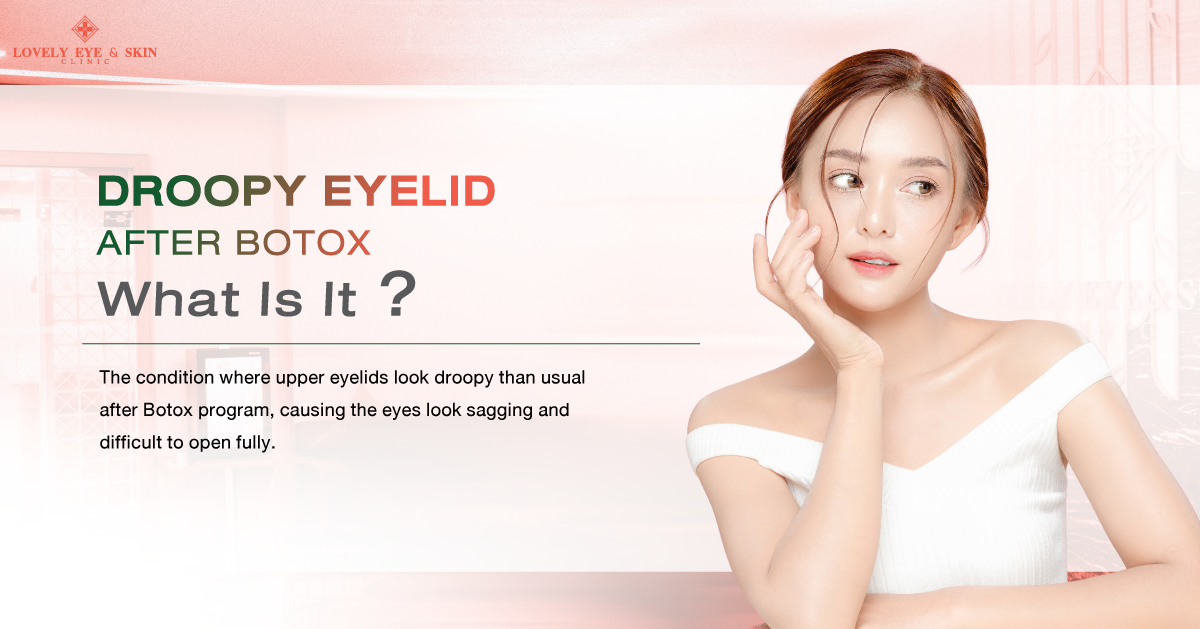
Droopy eyelid after Botox refers to a condition where the upper eyelid sags more than normal after Botox injections around the eye area. It may make the eyes look tired or partially closed, and you may feel unable to fully open your eyes. This usually happens because the muscle responsible for lifting the eyelid becomes temporarily weakened, or the toxin spreads to surrounded muscles unintentionally.
Causes of Droopy Eyelid After Botox
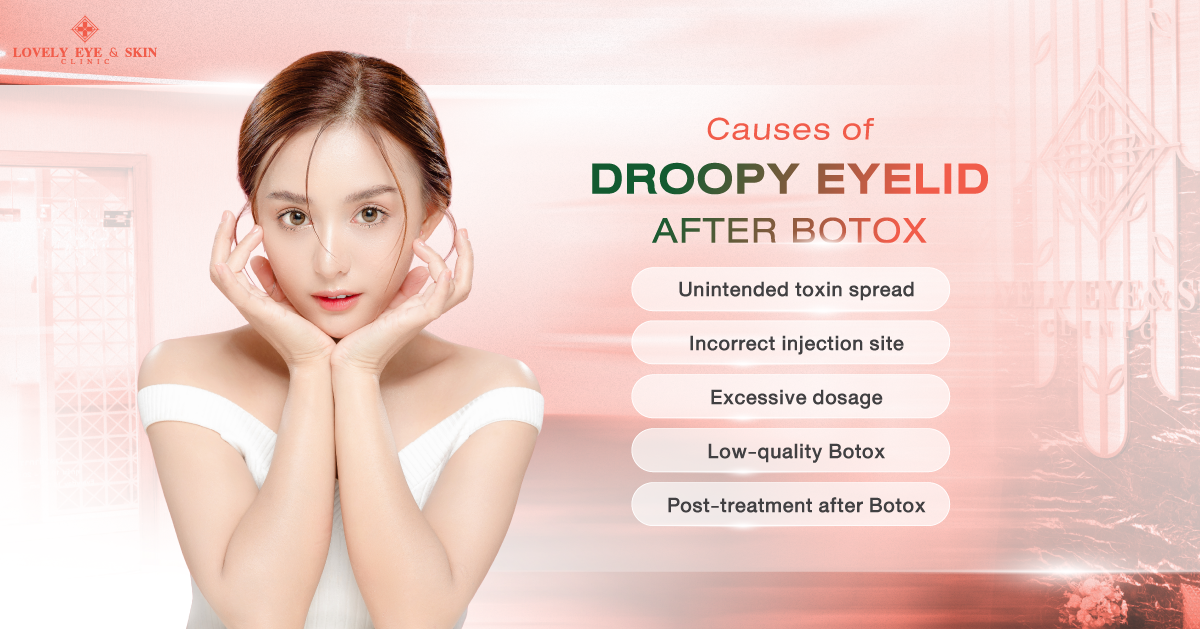
This condition can occur due to various factors, including:
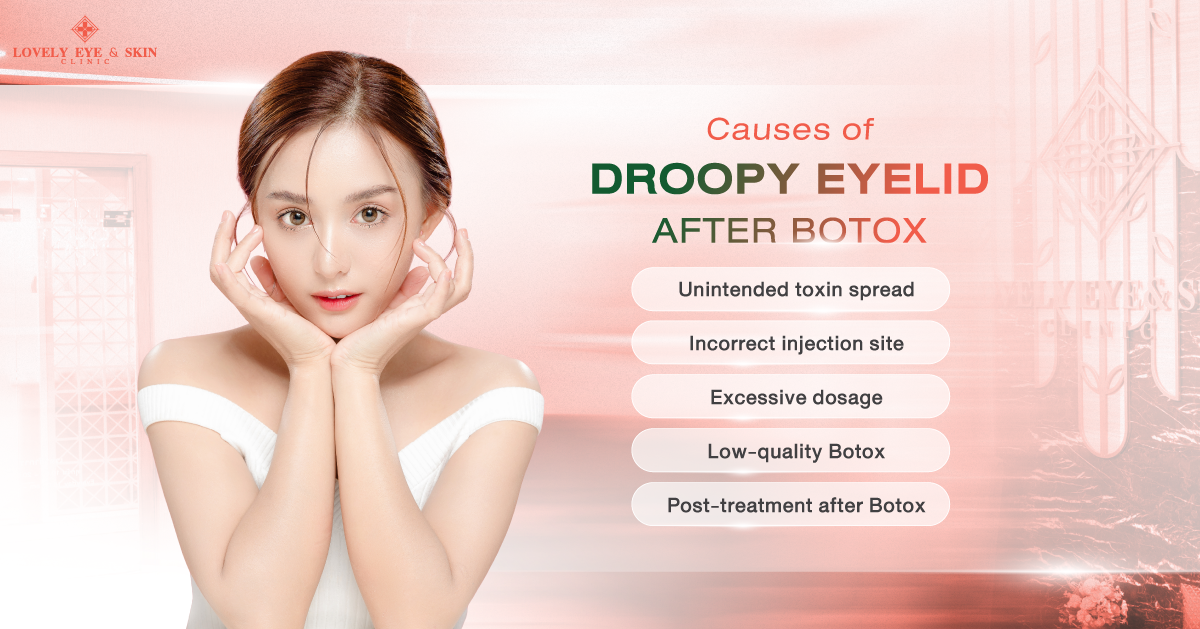
- Unintended toxin spread: If Botox diffuses into the muscle that lifts the eyelid, it can cause temporary weakened eyelid muscle, resulting in droopy eyelids.
- Incorrect injection site: The eye area has complex muscles; inaccurate injection can affect the wrong muscle.
- Excessive dosage: High doses increase the risk of unwanted diffusion due to difficulty in control.
- Low-quality Botox: Diluted or counterfeit products may spread more widely than expected.
- Post-treatment after Botox program: Rubbing, massaging on the injected areas, or lying down within 4 hours after injection can cause the toxin to move.
Effects of Droopy Eyelid After Botox
- Vision issues: Drooping eyelids can block the upper field of vision.
- Eye fatigue: Incomplete blinking may lead to dry, irritated eyes.
- Abnormal eye movement: Some may feel stiffness or difficulty moving the eyes.
- Facial asymmetry: If only one eyelid droops, the face may look uneven.
- Reduced confidence: The appearance may affect self-esteem and social interactions.
Droopy Eyelid After Botox: Is It Dangerous?
In most cases, droopy eyelid after Botox is not dangerous. It is temporary and usually resolves within 2–4 months as the effects of Botox wear off naturally. However, if symptoms interfere with vision, cause dryness, or do not improve, you should consult a doctor.
Droopy Eyelid After Botox Treatment
This condition can be treated, even though it requires some downtime. There are numerous treatments to dissolve injected botox. The examples include:
Energy-Based Treatments (Heat Devices)
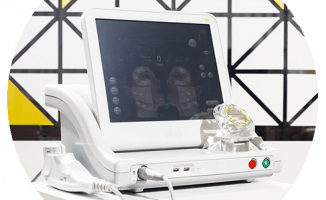
The use of heat-based or ultrasound waves technologies such as Ultraformer MPT, Ultherapy, or Thermage Eye Program can help stimulate blood circulation and accelerate the breakdown of Botox effects. These treatments are often most effective when performed within 1–2 weeks after symptoms occur. In addition, they can help tighten the skin around the eyes, reduce sagging, and support the muscles in returning to normal function more quickly. However, they should only be performed under a dermatologist’s evaluation to ensure the most appropriate technology is selected based on skin condition and symptom severity of each individual.
Steam, Sauna, or Facial Treatments
Steam therapy, sauna sessions, or facial treatments can help stimulate blood circulation around the eye area and gradually soften the effects of Botox. This approach works similarly to using warm compresses to reduce Botox effects.
These methods are generally recommended at least 5–7 days after Botox injections to avoid unwanted diffusion of the toxin during the early stage. They should also be done under a dermatologist’s supervision. The doctor will assess the severity of symptoms, the time since injection, and the condition of the skin around the eyes to determine the safest and most suitable approach, helping improve eyelid drooping without increasing the risk of other side effects.
Gentle Facial Massage
This treatment can only be performed if precisely evaluated by a professional dermatologist. This can help disperse away toxins from the affected areas and reduce suppression of the muscles that lift eyelids. However, this procedure require expertise and precision, as it involves a delicate area. The dermatologist will assess each case individually to ensure suitability, helping to alleviate droopy eyelids without increasing the risk of unwanted side effects.
Use of Eye Drops
Medicated eye drops are used temporarily to lift eyelids by stimulating Müller’s muscle. This helps the eyes appear more open, reduces droopiness, and improves vision. This treatment is recommended for those with mild case of droopy eyelid. Additionally, it can be used as a temporary solution while waiting for the toxins to naturally break down. However, consulting with dermatologist is required, as proper dosage and duration must be carefully controlled for safety.
Preparation Before Botox Program to Avoid Droopy Eyelid
Proper preparation before Botox program can help reduce the risk of droopy eyelids and other potential side effects. The recommended pre-treatment guidelines are as follows:
- Conduct research and consult a dermatologist before treatment: Choose a reputable clinic and a doctor who specializes in Botox injections. A proper assessment of your facial structure and the muscles around the eyes should be performed to ensure safe and appropriate treatment.
- Ensure that authentic Botox is used: Before Botox treatment, you should be able to see if the dermatologist use an authentic product and mix it in front of you. This is to confirm it has not been overly diluted, which could cause unintended diffusion.
- Avoid excessive dosage: Botox should not be administered in excessively high amounts. Generally, it should not exceed 300 units per session. During the procedure, cold compresses may be applied to reduce blood circulation in the treated area, helping minimize the risk of the product spreading to nearby muscles.
- Check testimonials (before-after): Review feedback from real patients, including photos and videos, on reliable and platforms such as official website or social media platforms. This helps you evaluate the dermatologist’s technique and the clinic’s credibility before making a decision.
Summary
Droopy eyelid after Botox is considered a possible side effect caused by spread toxins to the muscles that lift eyelid. This results in droopy eyes or difficulty to fully open the eyes. In most cases, this condition is not severe and gradually improves within 2-4 months. However, it may affect vision, eye comfort, and self-confidence. Symptoms can be alleviated with appropriate care, such as technologies that help accelerate the breakdown of the toxins or the use of specialized medicated eye drops under dermatologist's supervision.
Choosing a reliable clinic that uses authentic Botox, with proper dosage and precise injection techniques, along with correct pre- and post-treatment care, can significantly reduce the risk of droopy eyelids. For those who have undergone double eyelid surgery at Lovely Eye & Skin Clinic, our medical team carefully assesses each individual’s eyelid structure and administers Botox appropriately. This will minimize risks of loose double eyelids after surgery, reduce excessive muscle movement, and ensure natural-looking, long-lasting results.
Frequently-Asked Questions (FAQ) About Droopy Eyelid After Botox
Many people have questions about droopy eyelid after Botox and curious whether it is dangerous, what causes it, and whether it can resolve on its own. This section provides clear answers, helping you better understand this condition and how to manage it appropriately.
How to prevent droopy eyelid after Botox program?
Prevention begins with choosing a reliable clinic and a physician experienced in periocular anatomy. Authentic Botox should be used and administered in a dosage tailored to each individual. An assessment of the eyelid structure and surrounding muscles should be performed prior to treatment. After Botox program, the patient should avoid massaging, pressing, or rubbing the area, as well as lying down for at least 4 hours, to prevent unwanted diffusion of the toxins.
Can droopy eyelid after Botox improve on its own?
In general, droopy eyelid after Botox can resolve on its own, as the effect is caused by the temporary weakening of the muscles. Symptoms gradually improve within approximately 2–4 months as the Botox naturally wears off. During this period, treatments such as specialized medicated eye drops or certain procedures may help alleviate the symptoms under a physician’s guidance. If the condition is severe or does not improve, you should consult a doctor promptly.
Can droopy eyelid after Botox reoccur?
There is a possibility of recurrence if injections are administered at inappropriate locations or dosages, or if post-treatment care is not properly followed. However, the risk can be significantly reduced when the dermatologist adjusts the injection technique, choose the right injected areas, and uses a dosage tailored to each individual’s muscle structure. Informing your doctor of any previous history of droopy eyelids can also help ensure a safer and more personalized treatment plan.